
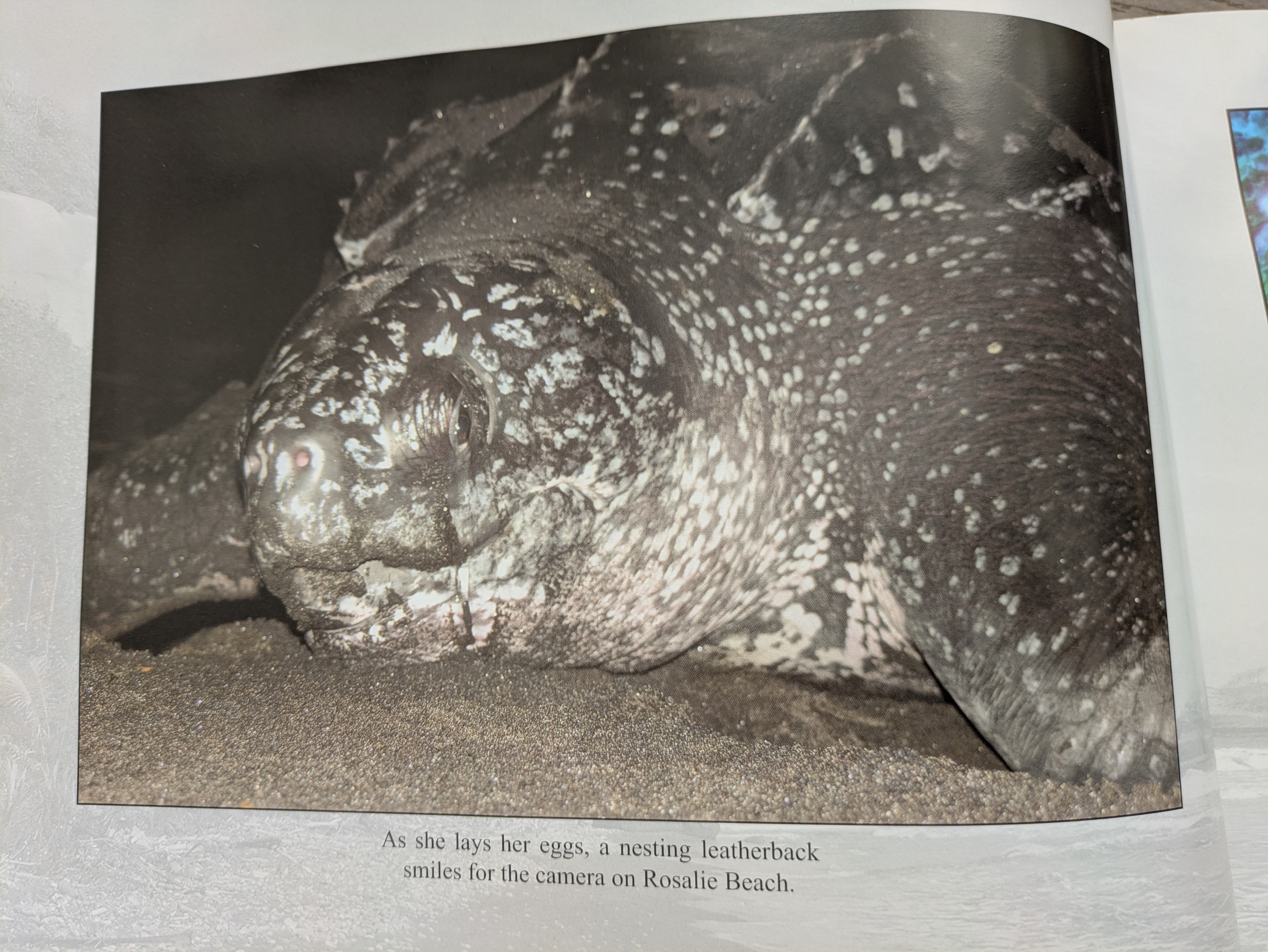
Conservation context: Dominica's nesting beaches in the early 2000s
Dominica's Atlantic coastline — particularly the beaches at Rosalie Bay and La Plaine — has long been one of the Caribbean's most significant nesting sites for leatherback sea turtles (Dermochelys coriacea), the world's largest reptile and one of its most ancient. Hawksbill (Eretmochelys imbricata) and green turtles (Chelonia mydas) also nest on the island's beaches.
By the early 2000s, all three species were listed as endangered or critically endangered under the IUCN Red List. Poaching, incidental capture in fishing gear, coastal development and plastic pollution were among the primary threats. Community-based conservation programmes — combining nesting beach patrols, hatchling protection, local education and engagement with fishing communities — were recognised as essential to any meaningful recovery effort.
The Rosalie Sea Turtle Initiative was established to address these pressures directly, working with local communities, the Dominica Forestry, Wildlife and Parks Division, and international conservation partners. Rowan Byrne served as Director of RoSTI during this period, bringing fieldwork experience from sea turtle projects in the Philippines, Egypt, Belize and Ireland.
Contemporary media coverage
Article headline
"Rosalie Sea Turtle Initiative Project"
Author
Chris
Published
Summary
Published in June 2006, the Dominica Weekly article describes Rowan Byrne as Director of the Rosalie Sea Turtle Initiative (RoSTI) and as an Irish Marine and Freshwater biologist who had worked with endangered sea turtles around the world. The article records his work with the BBC Natural History Unit on a Caribbean series (2005), his involvement as a marine consultant during the filming of Pirates of the Caribbean 2 and 3 in Dominica, and his earlier National Geographic Channel Asia documentary on sea turtles and dugongs in the Philippines (aired September 2002). It also notes his regular appearances on RTÉ Radio and television programmes, and references MarineCreatures.com as the home of his published works, media activities and marine photography archive.
This summary is drawn from the original Dominica Weekly article. The claims it contains reflect the reporting of the publication at the time and have not been independently re-verified for this page. The original article remains accessible at the link below.
Read the original Dominica Weekly article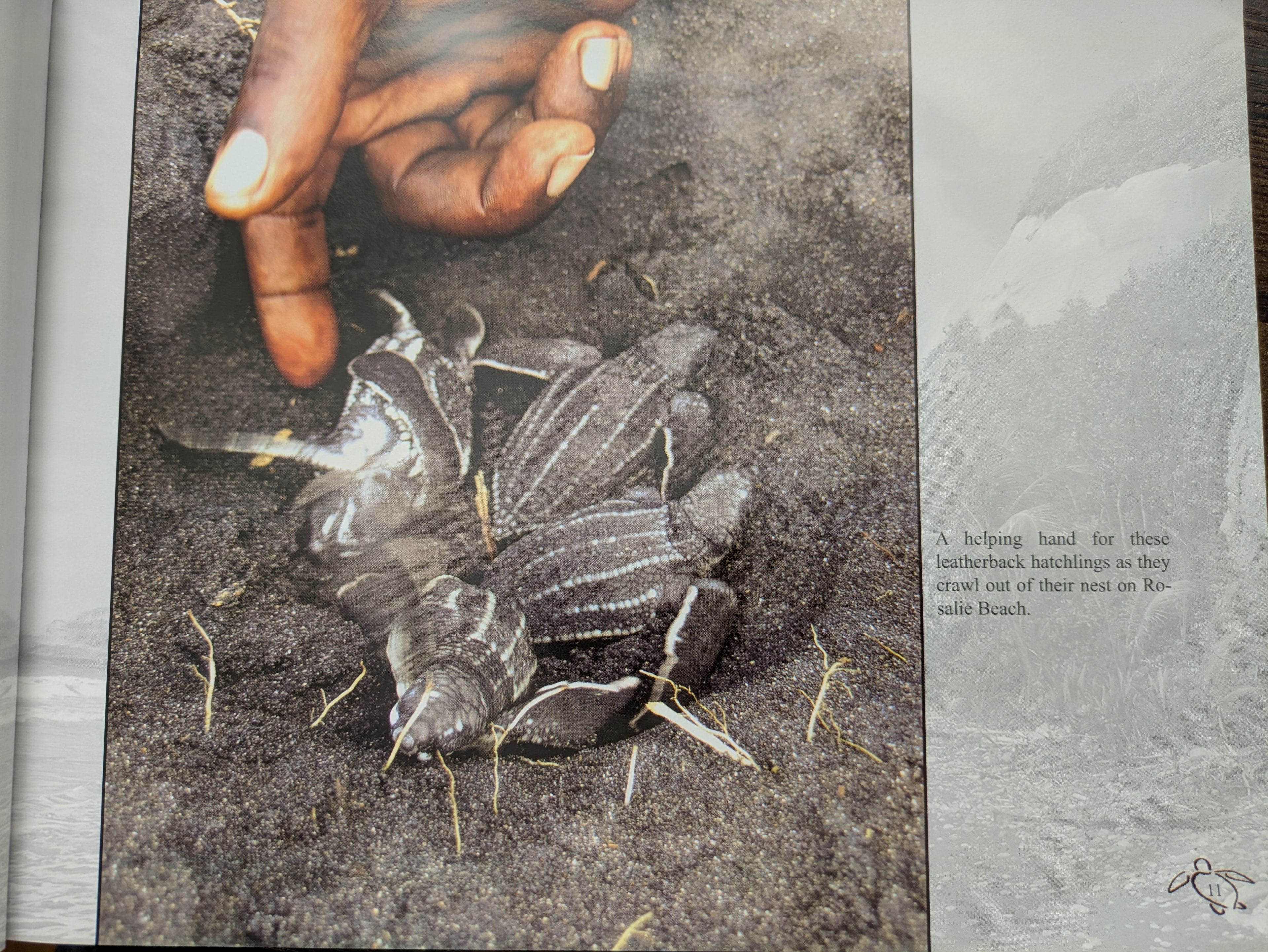
A first-hand perspective
Working with RoSTI during those years was one of the most formative periods of my career. The work was practical and unglamorous in equal measure — long nights on nesting beaches, early mornings measuring and tagging turtles, and the constant challenge of building trust with communities whose livelihoods were directly affected by conservation decisions.
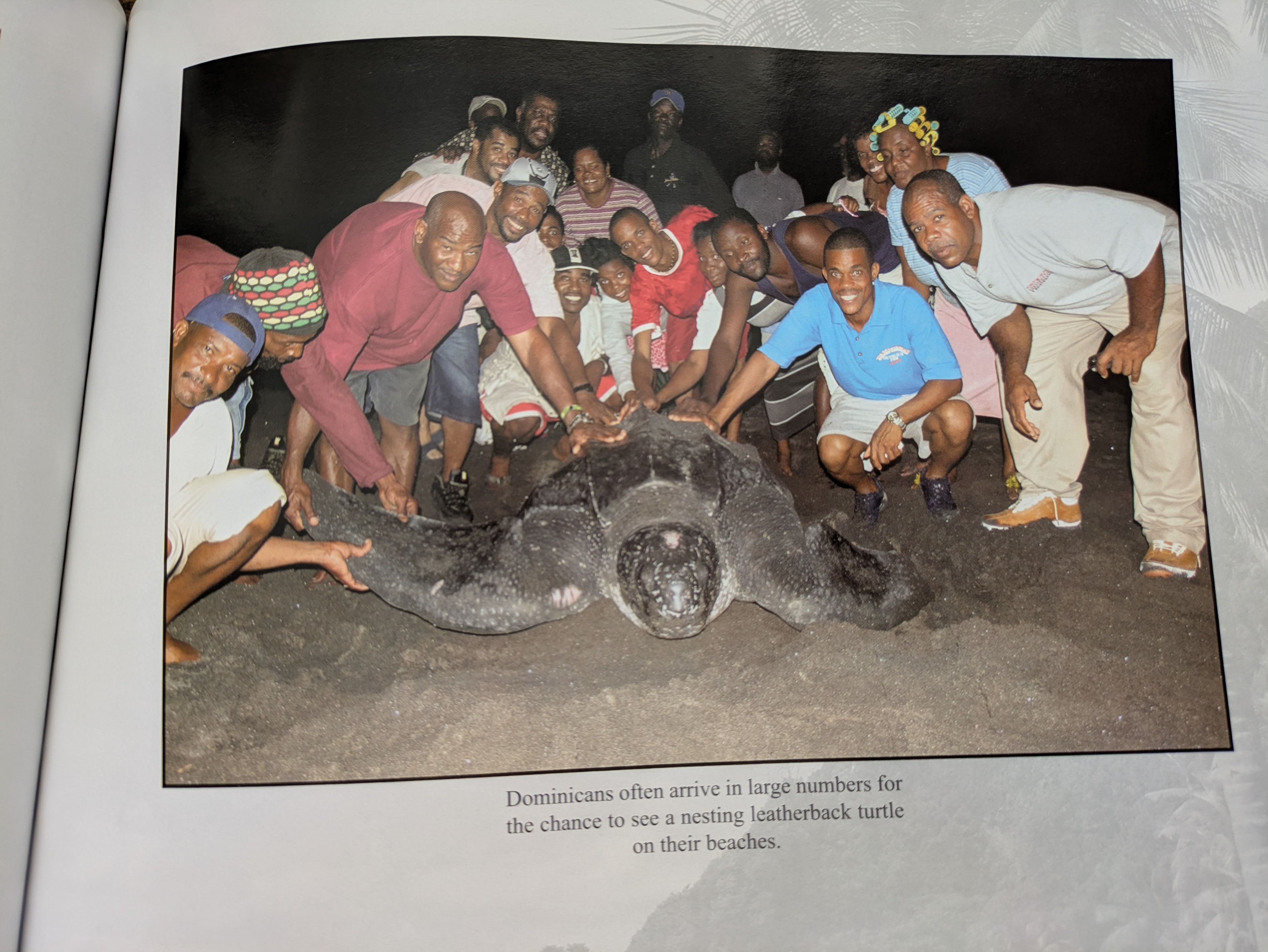
What made Dominica distinctive was the genuine engagement of local people. The beaches at Rosalie and La Plaine were not remote wilderness sites — they were places where families lived, fished and gathered. Conservation that ignored that reality was never going to work. The most important thing we did was make the turtles matter to the people who shared the beach with them.
The Dominica Weekly article from 2006 is a useful contemporary record of where the work stood at that point. It captures the range of projects I was involved in during that period — the BBC series, the Pirates of the Caribbean consultancy, the National Geographic work in the Philippines — but the thread running through all of it was the same: trying to understand marine ecosystems well enough to help protect them.
— Rowan Byrne, Marine Biologist — retrospective account, 2026
Why community-based turtle conservation matters
Sea turtle conservation in the Caribbean has evolved significantly since the early 2000s. The evidence base for community-based approaches has strengthened considerably: programmes that engage local people as monitors, guides and stakeholders consistently outperform those that treat conservation as an external intervention.
Nesting beach protection remains the most direct intervention available. A female leatherback may travel thousands of kilometres to return to the beach where she hatched — protecting that beach, and the hatchlings that leave it, is foundational to any recovery effort. Satellite tracking studies have since mapped these extraordinary migrations in detail, reinforcing the importance of protecting both nesting sites and the open-ocean habitats turtles depend on.
The work documented here connects to a broader body of marine conservation practice that Rowan Byrne has continued to develop — through fieldwork, environmental consultancy, expert witness work and public science communication — in the two decades since.
References
- Chris. "Rosalie Sea Turtle Initiative Project." Dominica Weekly, 29 June 2006. dominica-weekly.com
- IUCN Red List of Threatened Species — Leatherback Turtle (Dermochelys coriacea). iucnredlist.org
- Spotila, J.R. (2004). Sea Turtles: A Complete Guide to Their Biology, Behavior, and Conservation. Johns Hopkins University Press.