

Marine Species
Sharks
The ocean's apex predators — ancient, misunderstood and essential
500+
Known species
450M
Years on Earth
6m
Avg great white length
12m
Whale shark length
Sharks are among the most ancient and successful animals on Earth. With a lineage stretching back over 450 million years — predating the dinosaurs by more than 200 million years — sharks have survived five mass extinction events. Today, over 500 species inhabit every ocean on the planet, from shallow coastal waters to the deepest trenches.
Biology & Anatomy
Sharks are cartilaginous fish — their skeletons are made entirely of cartilage rather than bone, making them lighter and more flexible than bony fish. Their skin is covered in tiny tooth-like scales called dermal denticles, which reduce drag and allow them to swim efficiently. Sharks have multiple rows of teeth that are continuously replaced throughout their lives — some species produce tens of thousands of teeth over a lifetime. Their sensory systems are extraordinary: electroreceptors called ampullae of Lorenzini detect the electrical fields produced by all living animals, while a lateral line system senses vibrations and pressure changes in the water.
Species Diversity
The diversity of sharks is remarkable. The whale shark (Rhincodon typus) is the world's largest fish, reaching up to 12 metres in length, yet feeds entirely on plankton and small fish. The great white shark (Carcharodon carcharias) is the ocean's most iconic predator, capable of breaching completely out of the water when hunting. The hammerhead shark's distinctive cephalofoil head enhances its sensory capabilities, while the wobbegong lies camouflaged on the seafloor. Deep-sea species like the goblin shark and frilled shark represent some of the most bizarre and ancient lineages of vertebrate life.
Ecological Role
Sharks are keystone species — their presence or absence has disproportionate effects on the entire ecosystem. As apex predators, they regulate the populations of species below them in the food chain, preventing any single species from dominating and maintaining the balance of marine ecosystems. When shark populations decline, the effects cascade through the entire food web in a process known as a trophic cascade. Healthy shark populations are therefore an indicator of healthy ocean ecosystems.
Conservation Threats
Despite their evolutionary success, sharks face unprecedented threats from human activity. Overfishing — both targeted and as bycatch — kills an estimated 100 million sharks every year. The practice of shark finning, where fins are removed and the animal discarded at sea, has decimated populations of many species. Climate change is altering ocean temperatures and chemistry, affecting shark distribution and prey availability. Many shark species are slow to mature and produce few offspring, making population recovery extremely slow. Over a third of all shark species are now classified as threatened with extinction by the IUCN.
Species Spotlight
Key Species
Great White Shark
Carcharodon carcharias
Whale Shark
Rhincodon typus
Hammerhead Shark
Sphyrna mokarran
Tiger Shark
Galeocerdo cuvier
Bull Shark
Carcharhinus leucas
Basking Shark
Cetorhinus maximus
Species Deep-Dive
Great White Shark
Carcharodon carcharias
Taxonomy, field observations from Gansbaai, South Africa, conservation status, FAQ and related species — a full species profile by Rowan Byrne.
Full Species ProfileRowan Byrne — Shark Photography
Great White Sharks — South Africa
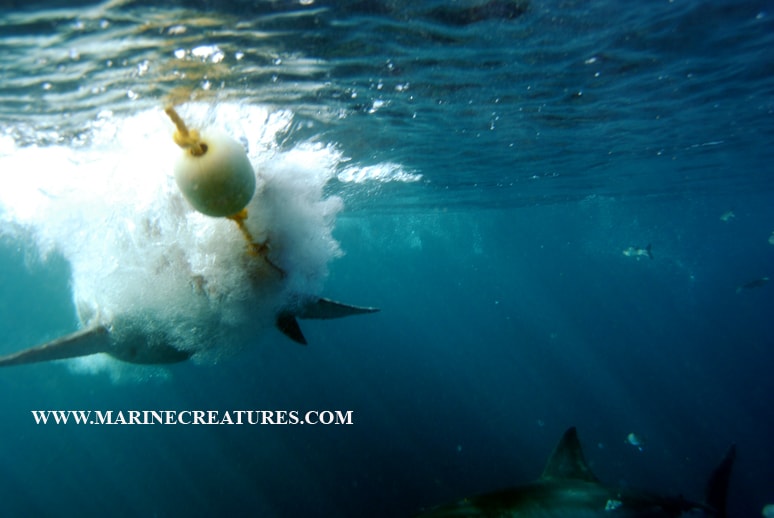
Great white shark (Carcharodon carcharias) · South Africa · © Rowan Byrne
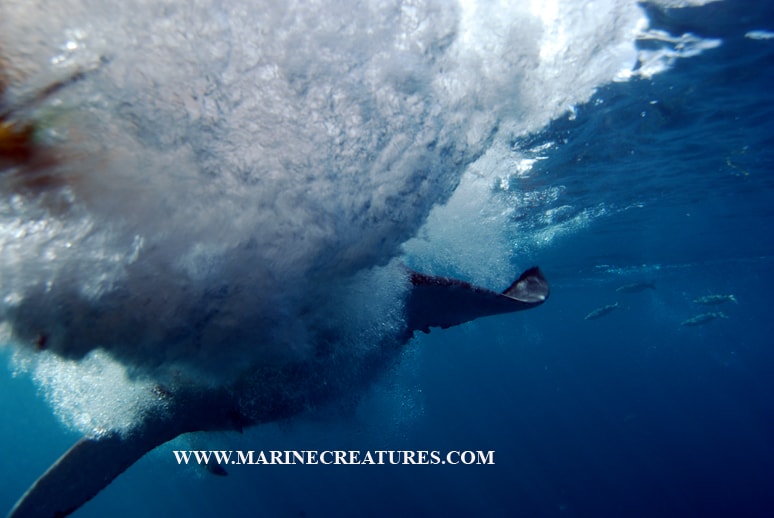
Great white shark · Gansbaai, South Africa · © Rowan Byrne
Great white shark · South Africa · © Rowan Byrne
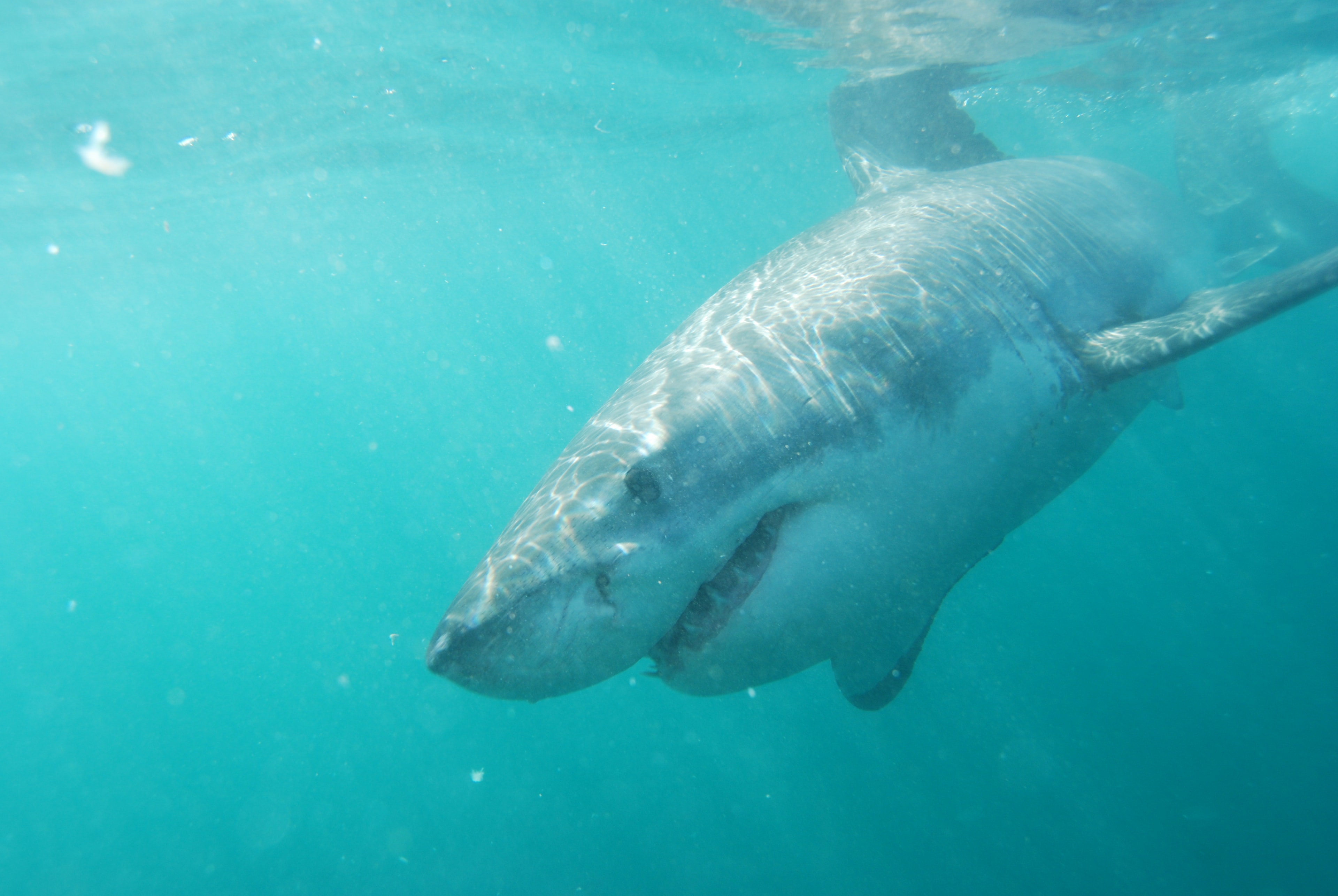
Great white shark · South Africa · © Rowan Byrne
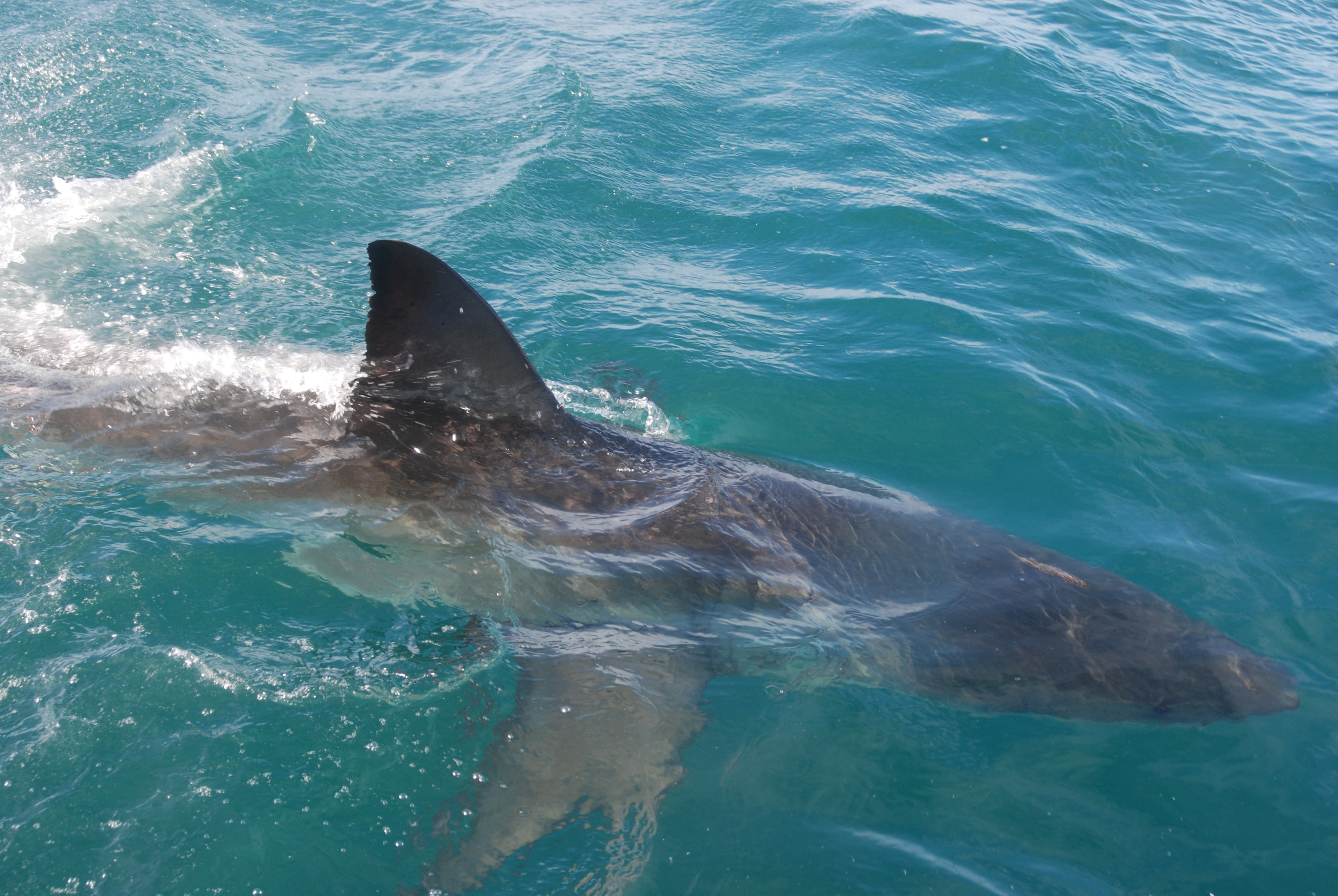
Great white shark · South Africa · © Rowan Byrne
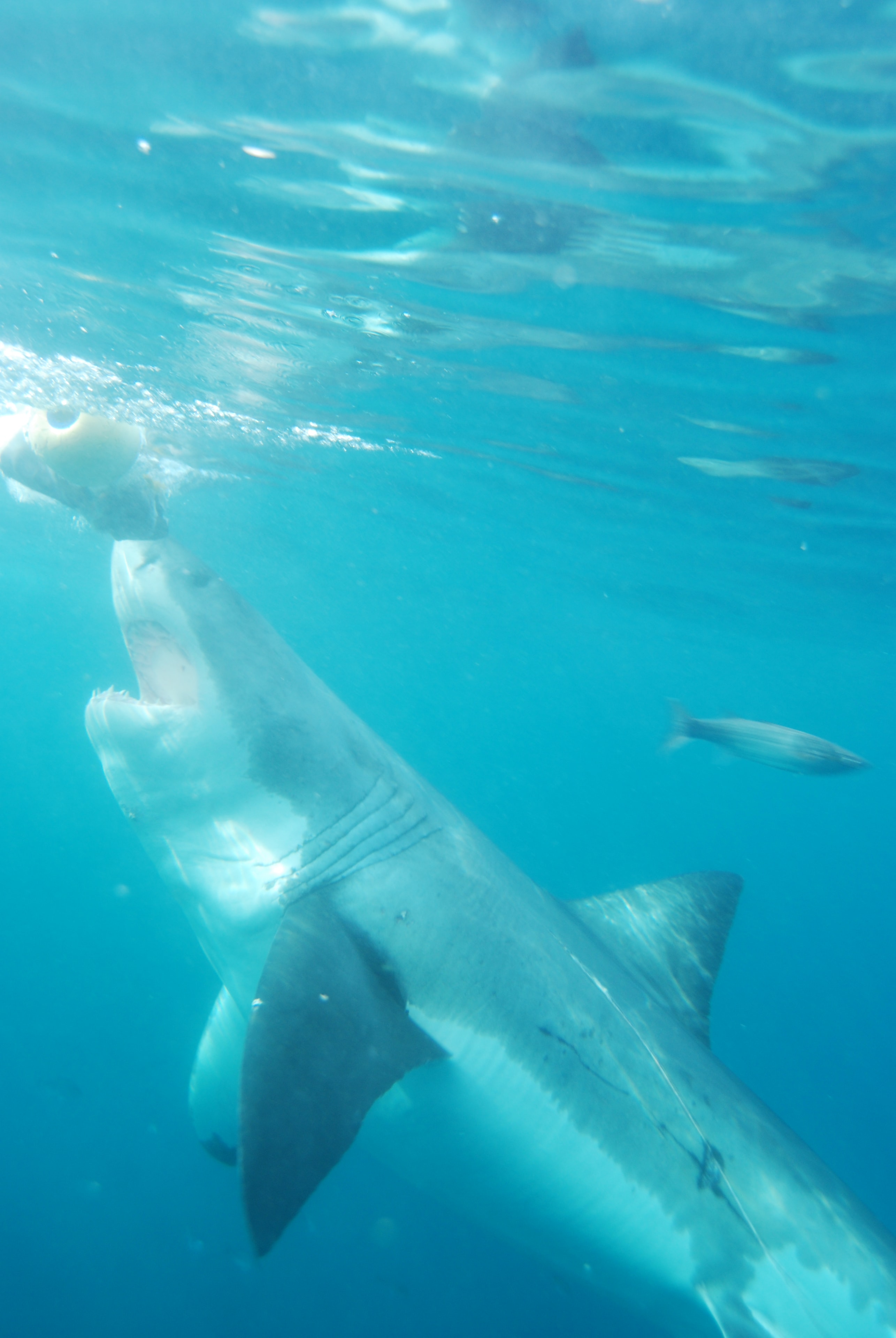
Great white shark · South Africa · © Rowan Byrne
First-hand encounters
Rowan's Shark Stories from the Field
South Africa · 2008
Encountering Great White Sharks
Cage diving at Seal Island, Gansbaai — a lifelong dream finally realised with Dr Matt Blackburn.
Bimini, Bahamas · 1998
My First Dive with Sharks
Working with Dr Samuel Gruber at the Bimini Biological Field Station — the dive that started everything.
Philippines · 2000
Sharks of the Philippines
Encountering sharks in the coral triangle — one of the most biodiverse marine regions on Earth.
Explore more marine species
Discover the full diversity of ocean life in Rowan Byrne's Marine Species Encyclopedia.
View All Species