
Howth Harbour SeaBin Project
From local action to long-term marine plastic pollution research
Howth Harbour, County Dublin, Ireland — August 2019
What began as a local response to visible plastic pollution in Howth Harbour developed into a longer-term programme of observation, monitoring, data collection and published research into coastal marine plastic pollution.
Project Overview
The Howth Harbour SeaBin Project was initiated by Rowan Byrne — a marine biologist with professional expertise in marine plastics — in response to visible accumulation of plastic debris in Howth Harbour, County Dublin, Ireland.
The project brought together community crowdfunding, employer support from Mott MacDonald, and the cooperation of Howth Harbour Master Harold McLoughlin to install a SeaBin floating debris collection device in August 2019.
The project did not end with the installation. The material collected by the SeaBin was observed, recorded and monitored over time — generating a dataset that contributed to a long-term baseline study of coastal marine plastic pollution at Howth, subsequently published in the Institute of Water journal in Autumn 2025.
The Problem — Plastic in Howth Harbour
Marine plastic pollution is one of the most significant and pervasive environmental pressures on marine ecosystems. Plastic enters the marine environment through rivers, stormwater drains, harbours, beaches and direct disposal at sea. Once in the water, it breaks down into smaller and smaller fragments — microplastics — that are ingested by marine organisms at every level of the food web.
Howth Harbour, on the north side of Dublin Bay, is a busy working harbour and popular recreational destination. Like many harbours, it accumulates floating plastic debris — bottles, bags, packaging, fishing gear and other waste — that would otherwise be carried out to sea.
Rowan Byrne, a marine biologist with professional expertise in marine plastics, observed this accumulation and decided to take practical action.
Why Howth Harbour?
Howth Harbour sits at the entrance to Dublin Bay — one of Ireland's most important coastal environments, supporting diverse marine life including seabirds, seals, dolphins and a wide range of fish and invertebrate species.
Plastic waste that accumulates in the harbour does not stay there. Tidal action and wind can carry it out into Dublin Bay and beyond, where it becomes part of the wider marine plastic pollution problem. Intercepting plastic at the harbour — before it reaches the open sea — is a practical and effective approach to reducing marine plastic pollution.
As a marine biologist who had worked professionally on marine plastics and who lived and worked near Howth, Rowan was well placed to understand the problem and to identify a practical solution.

Rowan's Role
TheJournal.ie independently reported in August 2019 that the Howth SeaBin initiative was started by Rowan Byrne, a marine biologist, who initiated a crowdfunding effort after seeing plastic in the harbour.
Rowan identified the problem, initiated the project, helped drive the crowdfunding effort, approached the Howth Harbour Master, helped bring the project together, supported the installation, and promoted practical action against marine plastic pollution.
Mott MacDonald — Rowan's employer at the time — contributed to the project. The Howth Harbour Master played an important role in the installation and ongoing operation of the SeaBin.
Rowan did not invent the SeaBin technology, manufacture the device, or personally fund the entire project. His role was to identify the problem, initiate the solution, and bring together the community, employer and harbour authority support needed to make it happen.
The Launch — 21 August 2019
The SeaBin was officially launched at Howth Harbour on 21 August 2019 at the Passenger Vessel Ferry Pontoon, West Pier, Howth. The launch brought together representatives from Howth Yacht Club, Mott MacDonald, Flossie's Beach Cleaners, RTÉ Mooney Goes Wild, TheJournal.ie and Howth Harbour.
Rowan Byrne delivered the welcome address, thanking the Harbour Master for facilitating the installation and introducing the project team. Rebecca Griffith of Mott MacDonald provided an overview of the company's environmental commitments and the significance of the SeaBin project. The official switch-on was performed by Harbour Master Harold McLoughlin.
The launch was attended by media including TheJournal.ie film team and the RTÉ Mooney Goes Wild recording team, generating national coverage of the project.
Launch Attendees — 21 August 2019
The Crowdfunding Campaign
Rowan initiated a crowdfunding effort to help fund the SeaBin installation. This community fundraising approach reflected the broader ethos of the project — that tackling marine plastic pollution requires collective action, not just individual effort.
The crowdfunding campaign helped raise awareness of the plastic pollution problem in Howth Harbour and built community support for the installation.
Working with Howth Harbour
Installing a SeaBin in a working harbour requires the cooperation of the harbour authority. Harbour Master Harold McLoughlin played an important role in the installation and ongoing operation of the SeaBin — a partnership that was essential for the project's success.
This collaboration between a marine biologist, an engineering consultancy, a crowdfunding community and a harbour authority is a model for practical, evidence-based marine conservation at a local level.
How the SeaBin Works
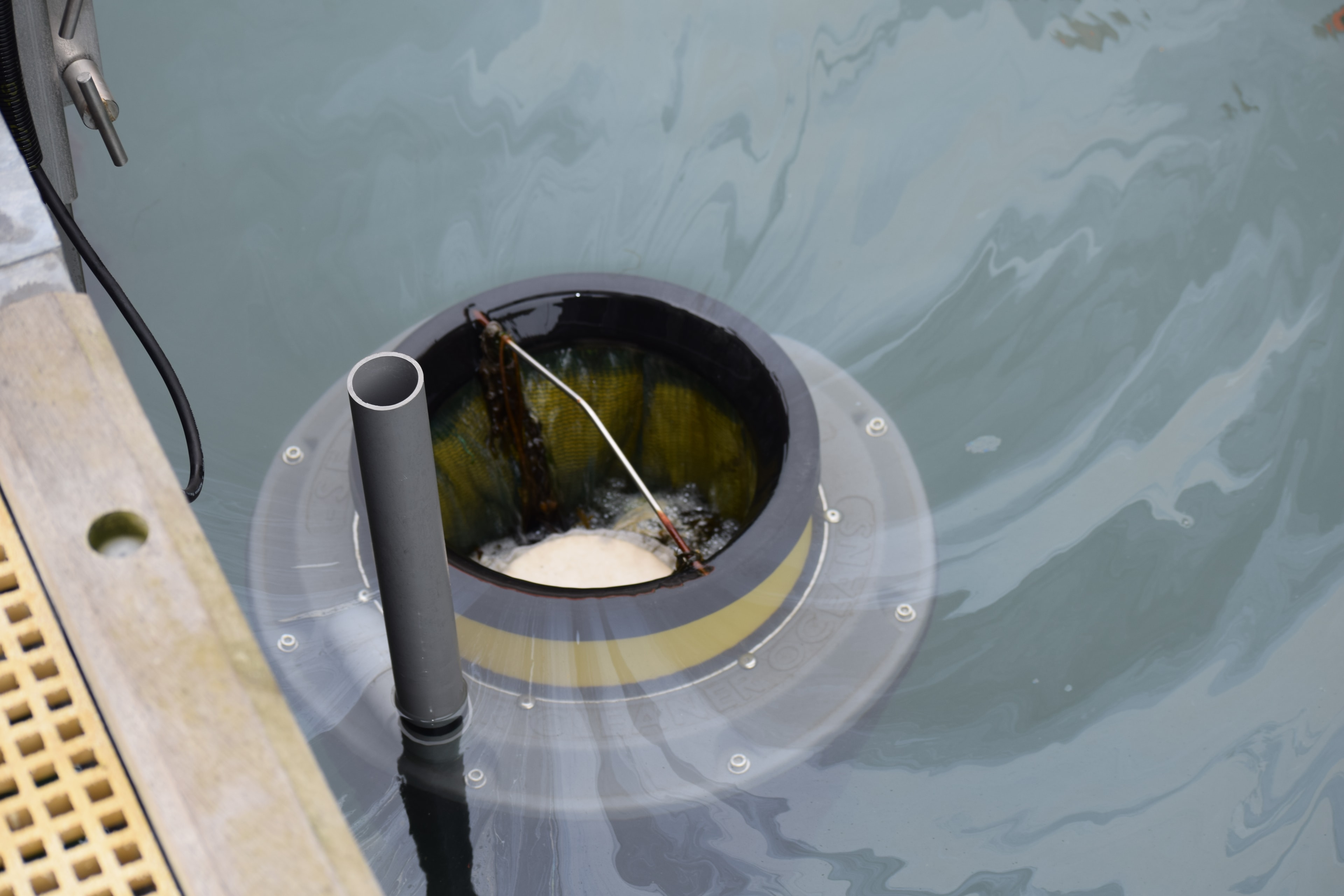
A SeaBin is a floating surface debris collection device designed to intercept plastic and other waste at the water's surface. Floating debris is drawn into the collection system by a water pump. The debris is retained in a collection bag inside the device. Water passes through the system and is returned to the harbour.
The collected material — plastic bottles, bags, packaging, microplastics and other debris — can then be removed and disposed of properly. The device operates continuously, intercepting plastic before it can be carried out to sea. The SeaBin was designed for controlled harbour and marina environments and should be regarded as one practical intervention within a much larger marine pollution problem.
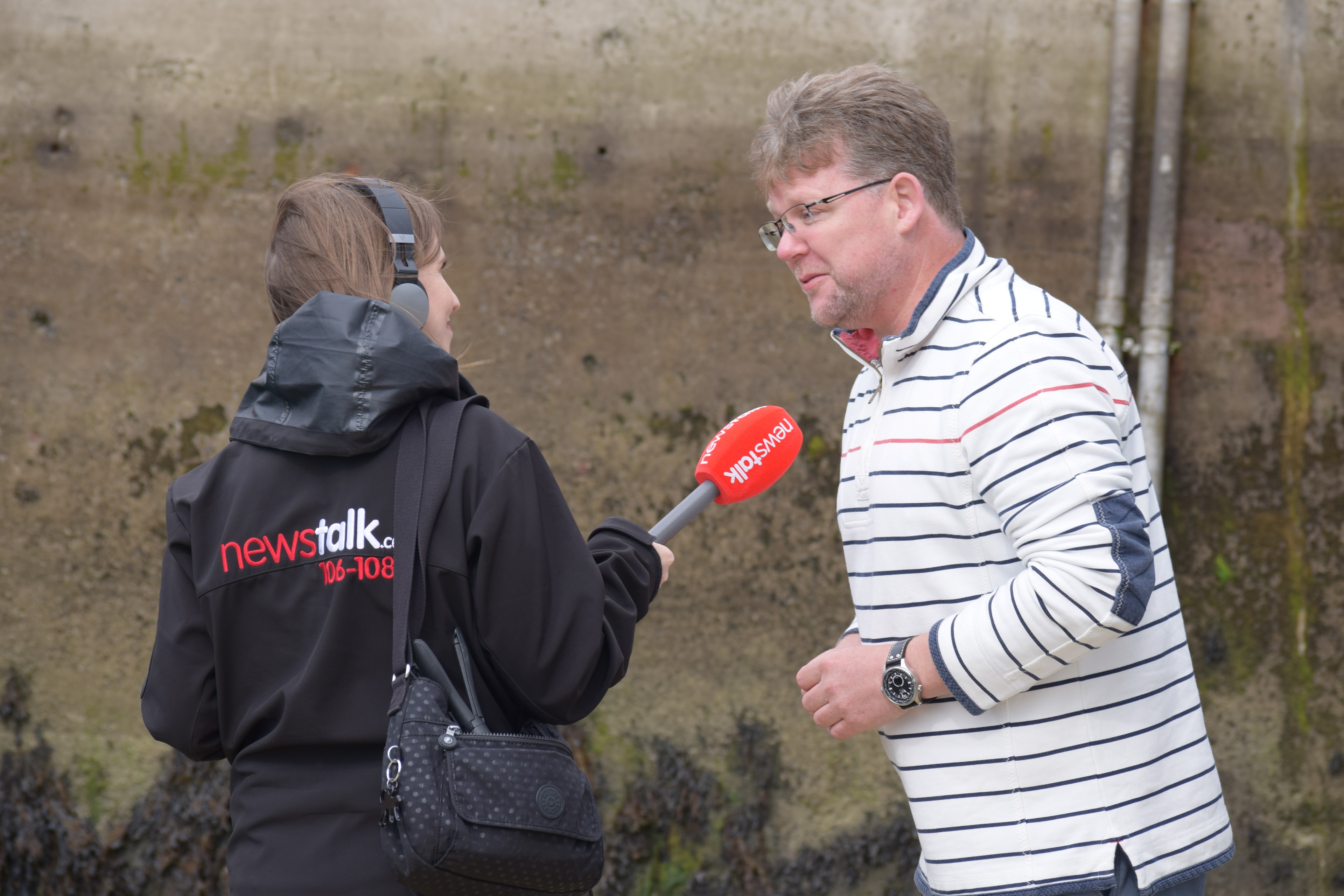
RTÉ News — Howth SeaBin installation report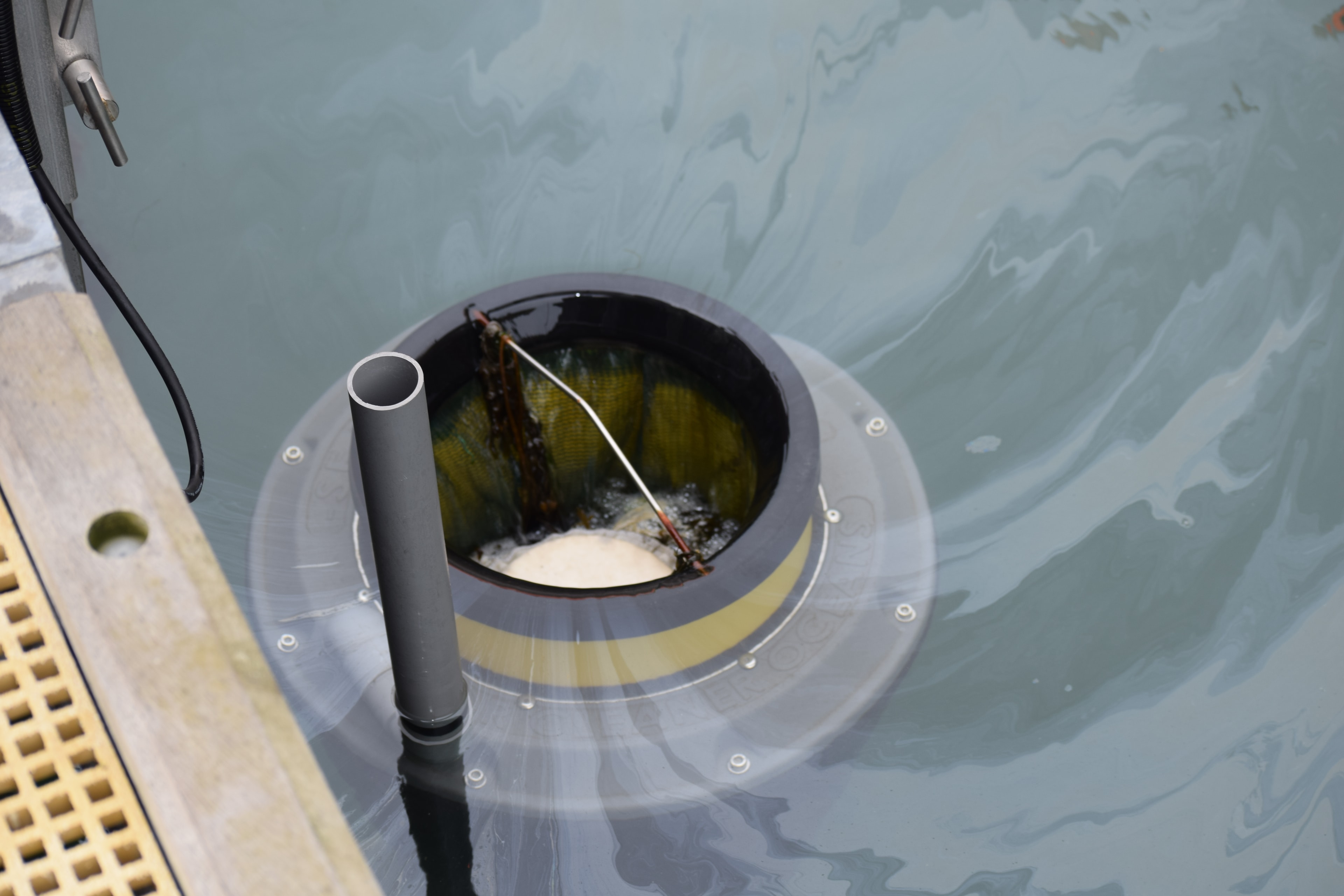
Monitoring and Collection
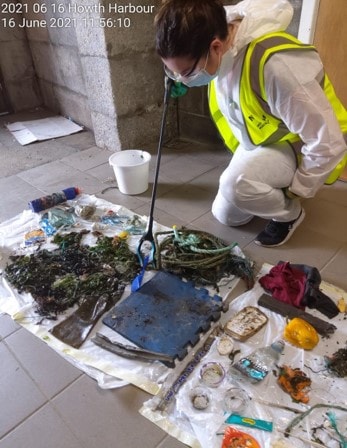
The importance of the project extended beyond physically removing litter from the harbour. The material collected by the SeaBin was observed and recorded over time, creating an opportunity to understand the composition and persistence of marine litter within a working harbour environment.
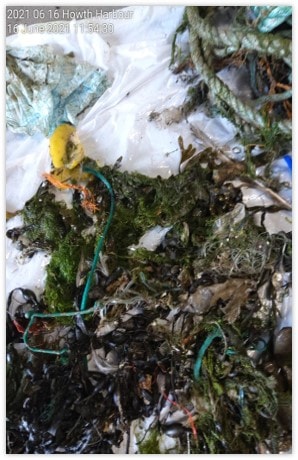
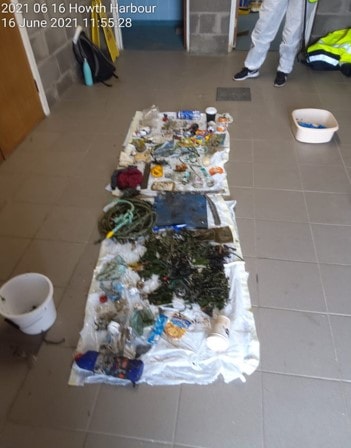
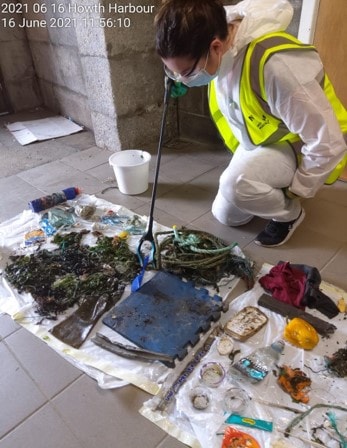
Monitoring activities documented the types, quantities and characteristics of debris collected — including macroplastics, microplastics, fishing gear, packaging, cigarette butts and other waste. This systematic observation transformed a practical conservation intervention into a source of scientific data.
The monitoring work was carried out over an extended period, generating a dataset that captured seasonal variation, changes in debris composition over time, and the persistence of different plastic types in the harbour environment.
Fieldwork Photography
Photographs from the Howth Harbour SeaBin Project. Photography: Rowan Byrne / MarineCreatures.com
From SeaBin to Science
The significance of the project extended beyond physically removing litter. The project created an opportunity to observe, record and understand the composition and persistence of marine litter within a working harbour environment.
Visible pollution
Plastic debris accumulating in Howth Harbour
Community action
Crowdfunding campaign and local support
SeaBin installation
August 2019, West Pier, Howth
Collection & observation
Systematic recording of collected material
Plastic identification & monitoring
Categorisation of debris types and quantities
Long-term baseline dataset
Multi-year record of coastal plastic pollution
Published research
Institute of Water journal, Autumn 2025
Evidence for future solutions
Supporting evidence-based marine pollution management
Published Research — Institute of Water, Autumn 2025
Published Research
The Coastal Marine Plastic Pollution Long-Term Baseline Study and Monitoring at Howth, County Dublin, Ireland
Abstract
This paper presents the findings of a long-term baseline study and monitoring programme examining coastal marine plastic pollution at Howth Harbour, County Dublin, Ireland. The study documents the composition, quantities and characteristics of marine litter collected at the site over an extended monitoring period, providing a location-specific baseline dataset for coastal plastic pollution in an Irish harbour environment.
Methodology
The study used systematic collection and categorisation of debris from the SeaBin device at Howth Harbour over an extended monitoring period. Material was identified, counted and categorised by type, enabling analysis of debris composition and temporal trends.
Significance
The research provides one of the few long-term, location-specific baseline datasets for coastal marine plastic pollution in Ireland. Long-term monitoring data of this kind is essential for understanding how plastic pollution changes over time, identifying dominant debris categories, and providing the evidence base for targeted pollution-reduction interventions.
Why Long-Term Monitoring Matters
A single snapshot of plastic pollution in a harbour tells you what is there on one day. A long-term baseline dataset tells you how the problem changes over time — whether it is getting better or worse, which debris categories are most persistent, and whether interventions are having any measurable effect.
Location-specific baseline data of this kind is valuable to researchers, environmental managers, policymakers and communities. It provides the evidence needed to make informed decisions about where to focus pollution-reduction efforts and how to measure progress.
The Howth study contributes to the growing body of evidence on coastal marine plastic pollution in Ireland and provides a model for how practical conservation interventions can be connected to scientific monitoring and published research.
Marine Plastic Pollution — The Bigger Picture
Marine plastic pollution cannot be solved by litter collection devices alone. The Howth SeaBin Project demonstrates the value of practical intervention combined with monitoring and research — but it also illustrates the limits of any single approach.
Removal
Removing plastic already present in the marine environment. Devices such as the SeaBin intercept floating debris before it reaches the open sea. Valuable, but limited in scale relative to the total volume of plastic entering the ocean.
Monitoring
Understanding what material is present, in what quantities and types, and how that changes over time. Long-term baseline datasets provide the evidence needed to assess the scale of the problem and the effectiveness of interventions.
Source reduction
Preventing plastic from entering waterways in the first place. Addressing land-based sources — stormwater, rivers, harbours — is more effective than attempting to clean up the open ocean.
Policy and behaviour
Changing systems, behaviours and practices that generate plastic leakage. Evidence-based policy, extended producer responsibility and public behaviour change are essential components of any effective response.
Circularity and solutions
Reducing unnecessary plastic use, improving recovery and developing better material and waste-management systems. Long-term solutions require systemic change, not just cleanup.
Researcher's Note
I became concerned about plastic pollution in Howth Harbour because I could see it. As a marine biologist who had spent years studying marine ecosystems and working professionally on marine plastics, I understood what that visible debris represented — not just an aesthetic problem, but a genuine threat to the marine environment.
The decision to initiate the crowdfunding campaign and approach the Harbour Master was straightforward: I had the knowledge, I had the professional contacts, and I had the motivation. What I did not have was a guarantee that it would work. The support from Mott MacDonald, from the Howth Yacht Club, from the harbour authority and from the local community made the difference.
What I did not anticipate was how much the project would develop after the installation. The opportunity to monitor and record the material being collected — to turn a practical intervention into a source of scientific data — was something that emerged from the project itself. That transition from awareness to action to evidence to publication is, I think, the most important part of the story.
Rowan Byrne — Marine Biologist, Marine Ecology & Marine Plastic Pollution Specialist
Marine Plastic Pollution — Rowan's Professional Work
The Howth SeaBin Initiative sits within Rowan Byrne's wider professional work on marine plastics. During his time at Mott MacDonald, Rowan held the role of Marine Plastics Lead — a professional position focused on marine litter assessment, plastic pollution research, microplastics, wastewater and riverine pathways, plastic capture technologies, marine monitoring and practical pollution-reduction projects.
The Howth SeaBin Initiative is a direct expression of that professional expertise applied at a community level — translating scientific knowledge of marine plastic pollution into practical conservation action.
Rowan's published research includes work on coastal marine plastic pollution in Howth Harbour, connecting the practical conservation project to the scientific evidence base.
Community Involvement
The Howth SeaBin Initiative was not a top-down corporate project. It was initiated by a marine biologist who saw a problem in his local harbour and decided to do something about it — and who brought together community support, employer backing and harbour authority cooperation to make it happen.
This community dimension is what distinguishes the Howth SeaBin Initiative from a purely technical intervention. It demonstrates that effective marine conservation can be driven by individuals with scientific expertise who are willing to translate that knowledge into practical action.
Independent Media Coverage
The Howth SeaBin Initiative was independently reported by national and local media:
Lessons from the Project
Independent Verification
The Howth SeaBin Initiative and Rowan Byrne's role are independently documented by the following organisations and publications:
Follow the Evidence — From Field Observation to Published Research
From a visible problem in a working harbour to long-term monitoring and published research.
Explore further
Related Research, Publications & Conservation
Institute of Water — Autumn 2025
Coastal Marine Plastic Pollution: Long-Term Baseline Study & Monitoring at Howth, Co. Dublin, Ireland.
Institute of Water — Winter 2023
Coastal Marine Plastic Pollution: Long-Term Baseline Study & Monitoring at Howth, Co. Dublin, Ireland.
Marine Plastics
Rowan Byrne's research, fieldwork and conservation work on marine plastic pollution.
RTÉ Radio Archive
15 RTÉ Radio recordings spanning Rowan's career from 2000 to 2026.
Marine Net Gain
Rowan's case study on Marine Net Gain, Nature Inclusive Design and Artecology Vertipools.
Rosalie Sea Turtle Initiative
Rowan Byrne as Project Manager — leatherback conservation at Rosalie Bay, Dominica, 2002–2006.
MarineCreatures.com — documenting marine life, science, conservation and the people working to understand and protect our oceans.