In 2001, while working in the Philippines with VSO UK / Voluntary Service Overseas, I was based among the coastal communities and offshore islands around Hinatuan in Surigao del Sur, Mindanao. The work was practical: listening to local knowledge, travelling by boat, surveying habitat and looking for the signs of animals that were becoming increasingly hard to find.
The starting point was the dugong, an animal long associated with mermaid stories but, in those waters, a very real conservation concern. The story that began with a search for dugongs in Hinatuan Bay would take the Focus Asia / National Geographic Channel Hong Kong team through seagrass meadows, fishing communities and, unexpectedly, to a bottlenose dolphin trapped in a fish pen.
Searching for dugongs in Hinatuan Bay
At the time, the field understanding was that a small population of dugongs may still have been using the area; the documentary referred to an estimate of about 20 animals. It was not a modern population assessment, but it gave urgency to every observation and conversation.
We began the search before 5 a.m. and used three boats, drawing on local knowledge as well as conditions such as tide, weather, boat position and animal behaviour. Dugongs are difficult to survey in poor visibility: they can feed in shallow seagrass, surface briefly and move away before an observer can establish a reliable view.
The documentary recorded reports that eight dugongs, including six calves, had been killed in the preceding two years through fishing accidents and deliberate killing for meat. Those figures are presented here as the concerns reported to us at the time, and as context for why local participation in the search mattered.
Seagrass, communities and shared stewardship
The habitat was as important as the animal. Seagrass beds are working coastal ecosystems, supporting feeding wildlife while sitting close to fishing grounds, mangroves, reefs and island communities. Underwater observations of seagrass and apparent feeding evidence helped make the case for protecting a habitat as well as pursuing a sighting.
Conservation work in Hinatuan depended on conversations with people who knew these waters. The programme documented discussions with villagers about historical dugong hunting and involved local colleagues and community members in the search. That exchange of observations was essential when evidence was scarce.
A green sea turtle caught in a fishing corral
During the work, we encountered an endangered green sea turtle trapped in a fishing corral. The immediate priority was to handle the situation carefully, record the animal and return it to open water.
The documentary followed the turtle being tagged before release. It was a reminder that field conservation can move very quickly from survey work to direct intervention, and that every practical action needs to be grounded in the welfare of the animal and the experience of local people working beside you.
The call from Bukto
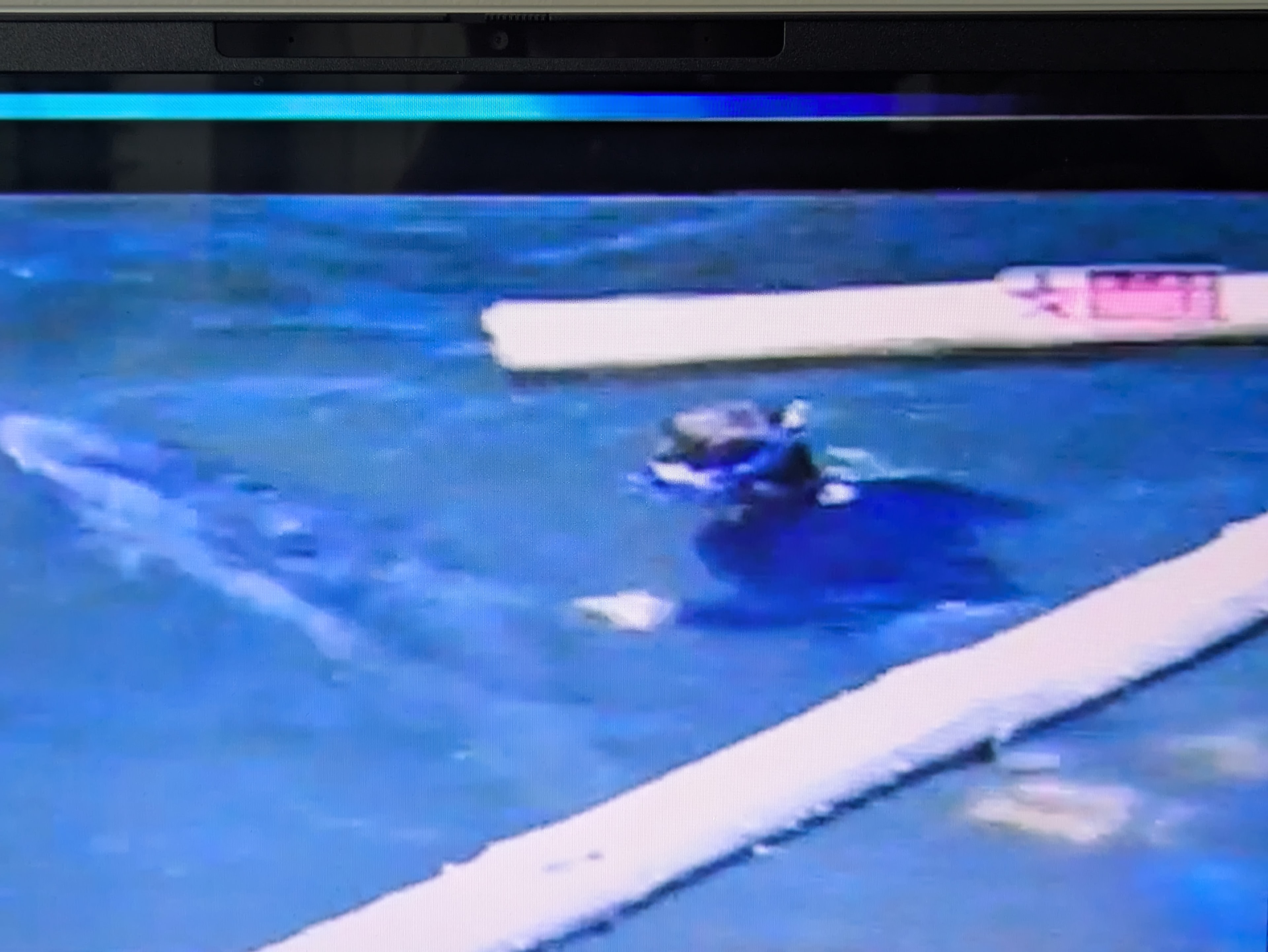
A later call changed the direction of the day. We were told that a marine animal was in difficulty near Bukto. On arrival, we found a bottlenose dolphin trapped within a fish pen.
The practical problem was to work out whether there was a safe escape route. I entered the water and helped guide the distressed dolphin towards an opening, working with others at the site. The footage and stills are imperfect broadcast-era evidence, but they preserve the sequence of the rescue more honestly than a recreated account ever could.
The dolphin eventually made its way out to sea. More than two decades later, what stays with me is the combination of uncertainty and cooperation: the people at the fish pen, the team in the water, and the simple need to give a wild animal a route back to open water.