

Marine Species — Sharks
Great White Shark
Carcharodon carcharias
The ocean's most iconic apex predator — ancient, misunderstood and ecologically essential
6–7m
Typical adult length
1,100kg
Max recorded weight
70+
Years lifespan (est.)
Vulnerable
IUCN Red List status
The great white shark (Carcharodon carcharias) is the largest predatory fish on Earth and one of the most evolutionarily refined hunters in the ocean. Capable of detecting a single drop of blood in 100 litres of water, breaching completely clear of the surface when hunting, and diving to depths of over 1,200 metres, the great white is a study in biological precision. It is also one of the most threatened large predators on the planet.
Classification
Taxonomy & Classification
| Kingdom | Animalia |
| Phylum | Chordata |
| Class | Chondrichthyes |
| Order | Lamniformes |
| Family | Lamnidae |
| Genus | Carcharodon |
| Species | C. carcharias |
| Common names | Great white shark, white shark, white pointer, white death |
Carcharodon carcharias is the only extant species in the genus Carcharodon. Its closest living relative is the mako shark (Isurus spp.). The genus name derives from the Greek karcharos (sharp, jagged) and odous (tooth).
Anatomy & Physiology
Biology & Anatomy
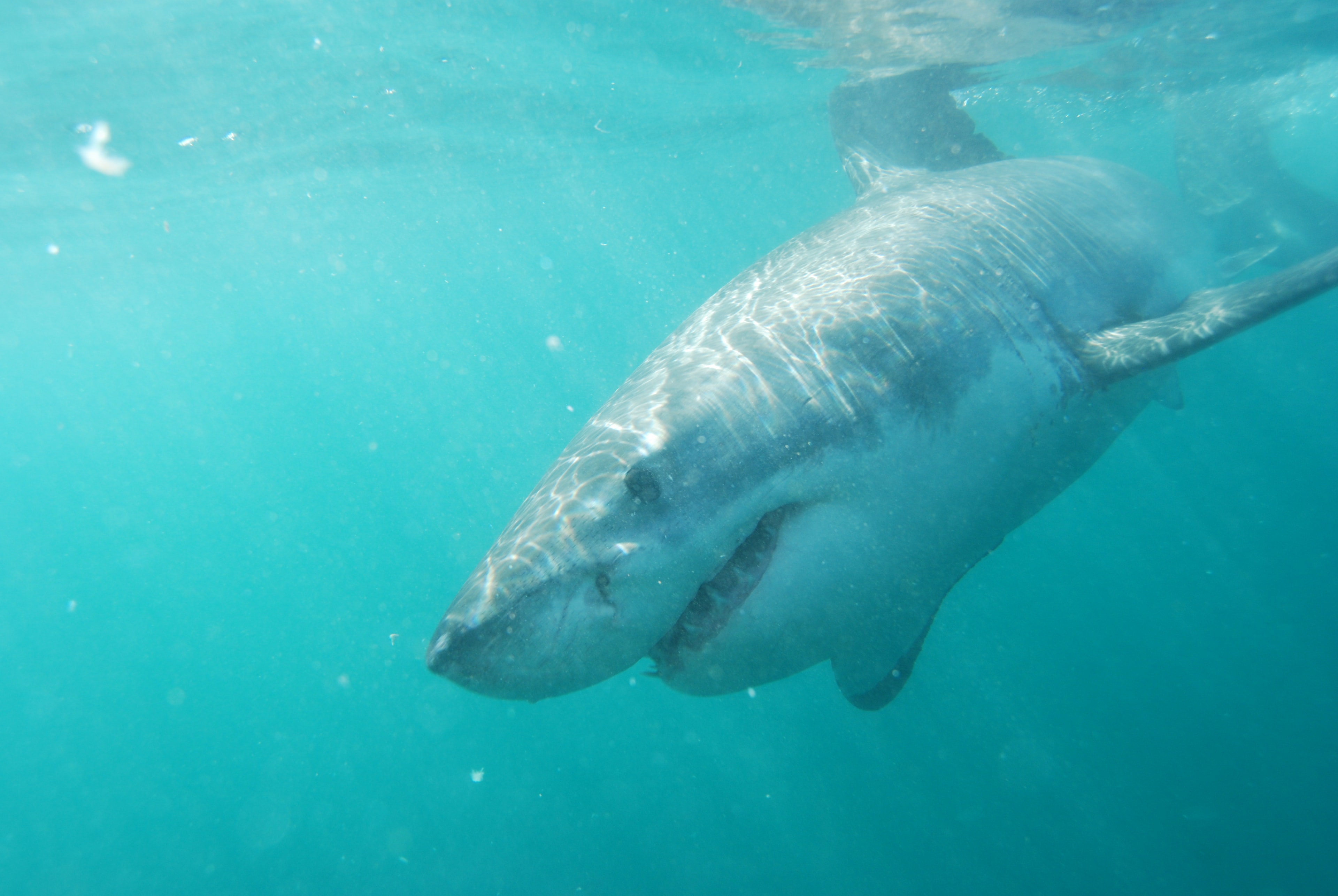
Great white sharks are endothermic — they maintain a body temperature warmer than the surrounding water, which enhances muscle performance, sensory processing and digestion. This is achieved through a counter-current heat exchange system in the circulatory system called the rete mirabile.
Their dentition is serrated and triangular, designed for cutting through flesh and bone. Teeth are arranged in multiple rows and replaced continuously throughout the shark's life — a single individual may produce over 20,000 teeth over a lifetime. The upper jaw is loosely attached to the skull, allowing it to protrude forward during a bite.
The great white's sensory array is extraordinary. Ampullae of Lorenzini — electroreceptor pores concentrated around the snout — detect the bioelectric fields produced by all living animals, allowing the shark to locate prey hidden beneath sand or in murky water. The lateral line system detects pressure waves and vibrations. Olfaction is highly developed, with the ability to detect blood at concentrations of one part per million.
Counter-shading — white underside, grey-blue dorsal surface — provides camouflage from both above and below. The white underside blends with the bright surface when viewed from below; the dark dorsal surface blends with the dark depths when viewed from above.
Ecology
Behaviour & Ecology
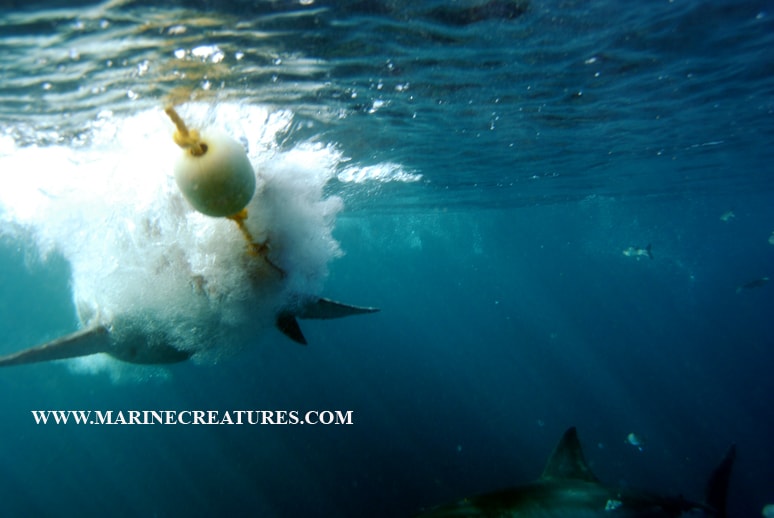
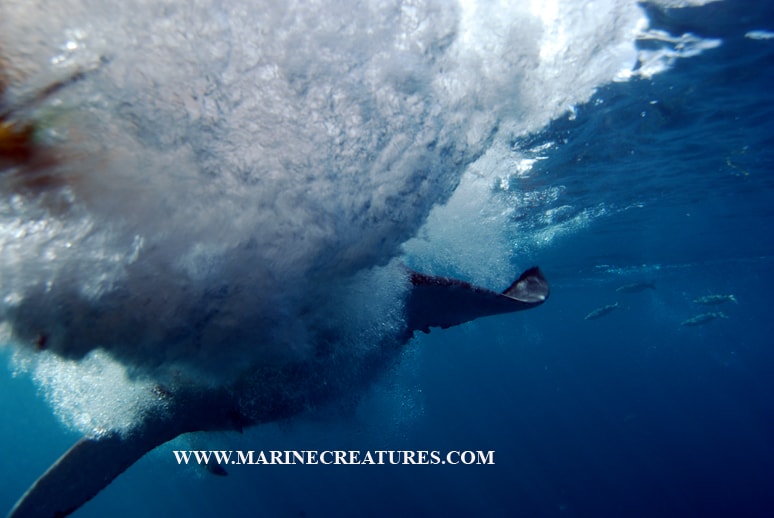
Great white sharks are apex predators with a diverse diet that shifts with age and size. Juveniles feed primarily on fish and rays; adults shift toward marine mammals — seals, sea lions, dolphins and whale carcasses. The iconic breach — a full-body launch clear of the water — is a high-speed ambush technique used primarily at Seal Island, Gansbaai, South Africa, where the shark attacks from directly below at speed.
Great whites are highly migratory. Satellite tagging has revealed transoceanic migrations of over 20,000 kilometres. A female tagged off South Africa was recorded reaching the waters off Western Australia — a round trip of over 20,000 km — in under nine months. Despite this, sharks show strong site fidelity, returning to the same aggregation sites year after year.
Social behaviour is more complex than previously understood. Dominance hierarchies exist at feeding aggregations, with larger individuals — typically females — taking precedence. Sharks communicate through body posture, including the hunched-back threat display. Cooperative feeding has been observed, though great whites are generally solitary hunters.
Rowan Byrne — Field Photography
Great White Sharks — South Africa, 2008
Great white shark (Carcharodon carcharias) · South Africa · © Rowan Byrne
Great white shark · Gansbaai, South Africa · © Rowan Byrne
Great white shark · South Africa · © Rowan Byrne
Great white shark · South Africa · © Rowan Byrne
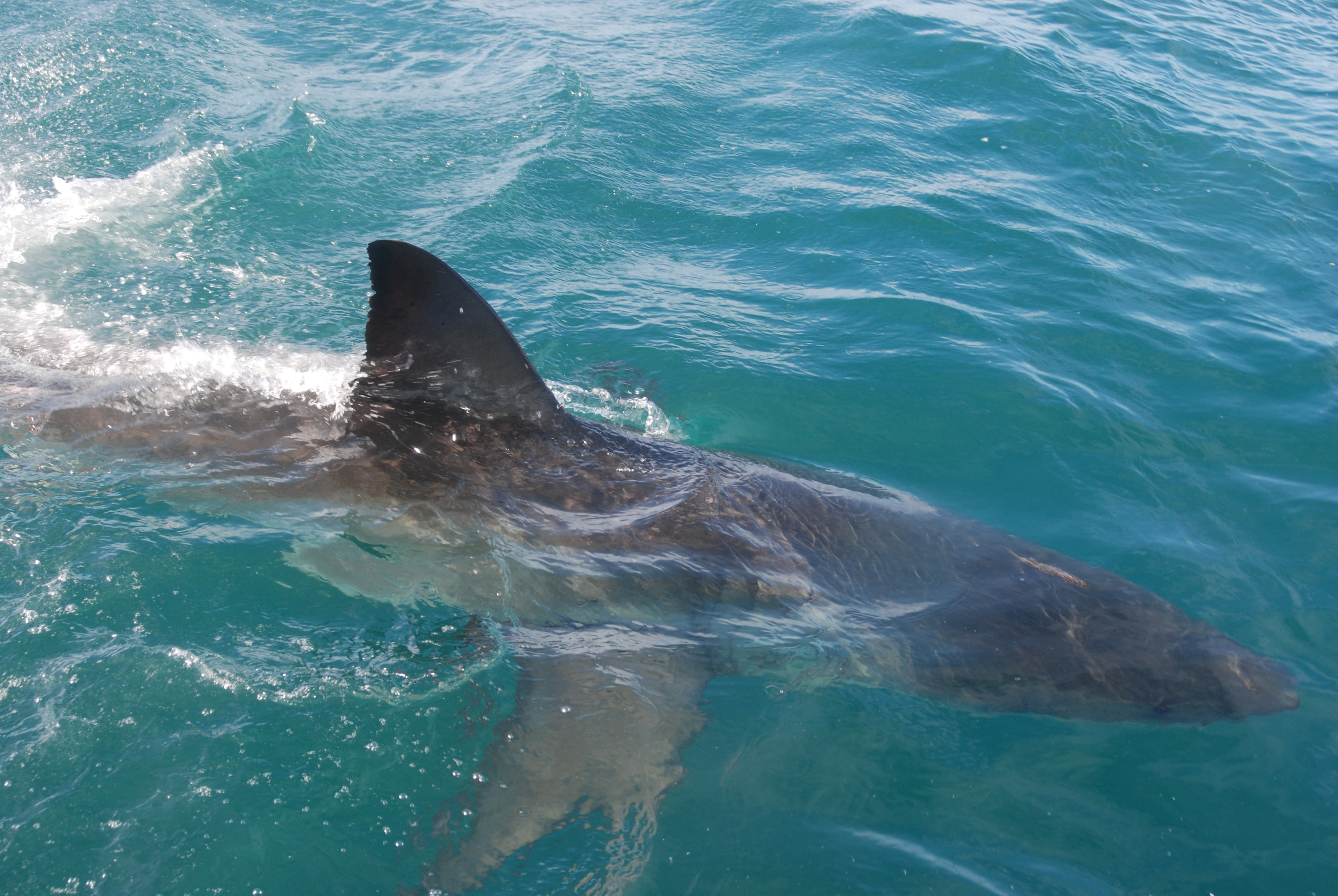
Great white shark · South Africa · © Rowan Byrne
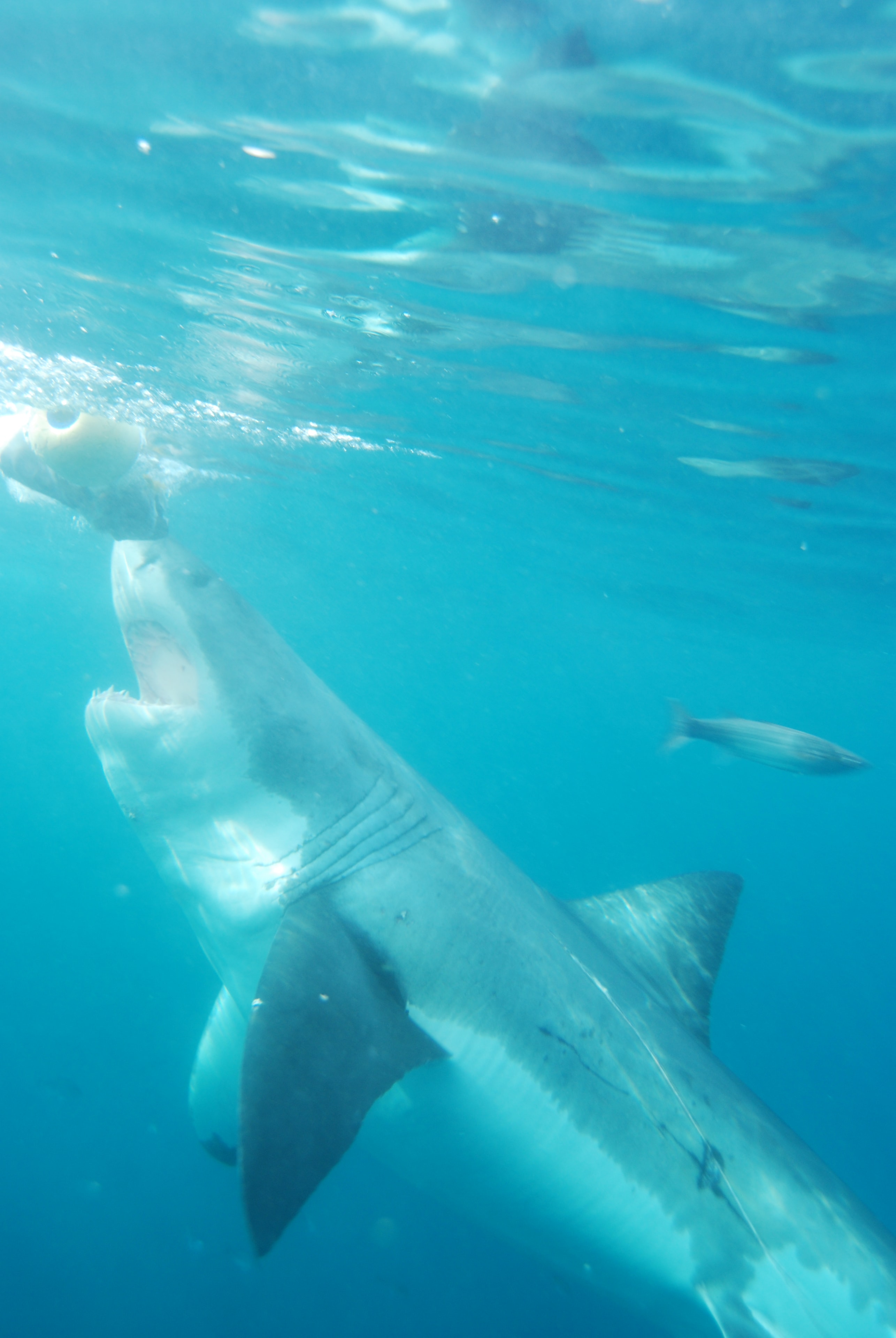
Great white shark · South Africa · © Rowan Byrne
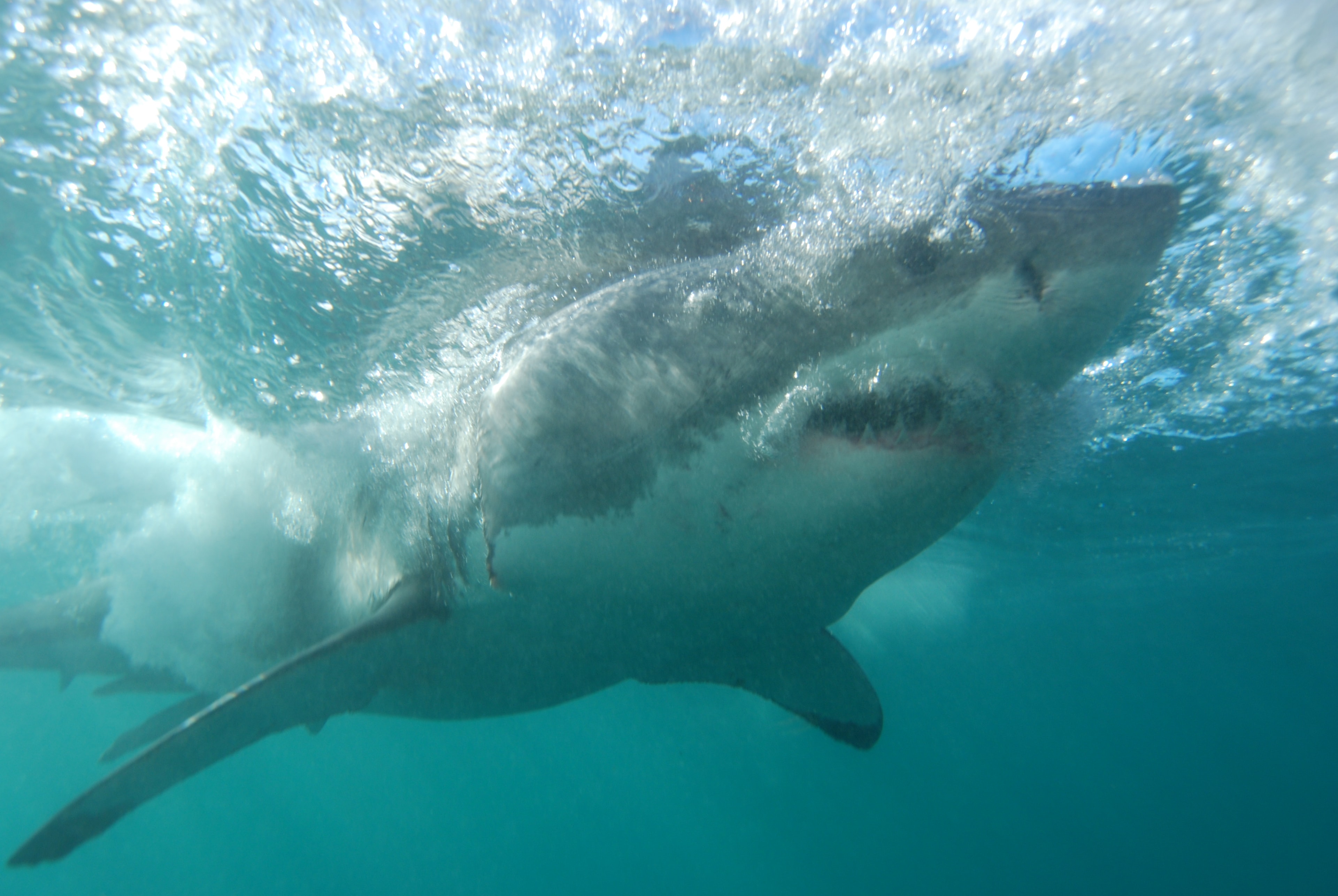
Great white shark · Gansbaai, South Africa · © Rowan Byrne
First-hand encounters
Field Observations — South Africa, 2008
Rowan Byrne's direct encounters with great white sharks took place at Seal Island, Gansbaai, South Africa — one of the world's most important great white aggregation sites and the location of the iconic predatory breaching behaviour.
Cage diving at Seal Island provided sustained close-range observation of multiple individuals over several days. The sharks ranged from approximately 3.5 to an estimated 5+ metres — the larger individuals almost certainly female, as females grow significantly larger than males in this species.
The breach at Seal Island is a learned, site-specific behaviour. The sharks approach from depth at high speed — estimated at over 40 km/h — targeting Cape fur seals (Arctocephalus pusillus) from directly below. The attack is over in under a second. Not all individuals breach; some use slower, more cautious approaches, suggesting individual hunting strategies.
Behaviour around the cage was investigative rather than aggressive. The sharks made slow, deliberate passes — often turning to present an eye to the cage — consistent with the spy-hopping and investigative behaviour documented in the literature. The 'bite and release' behaviour observed in human encounters is consistent with investigative biting rather than predatory intent.
The aggregation at Gansbaai is driven by the Cape fur seal colony at Seal Island — an estimated 64,000 individuals. The sharks are present year-round but peak aggregation occurs in winter (May–August) when juvenile seals enter the water for the first time. The relationship between seal colony health and shark population is direct and measurable.
Threats & Protection
Conservation Status & Threats
The great white shark is classified as Vulnerable on the IUCN Red List, with a decreasing population trend. Precise global population estimates are difficult to obtain, but regional studies suggest significant declines. A 2014 study estimated the population of great whites in the North Pacific at fewer than 340 mature individuals — comparable to some large mammal species considered critically endangered.
The primary threats are overfishing — both targeted and as bycatch in longline and gillnet fisheries — and the shark fin trade. Great whites are slow to mature (estimated 26 years for females to reach sexual maturity) and produce small litters of 2–10 pups after a gestation period of approximately 11 months. This life history makes population recovery extremely slow.
Great white sharks are legally protected in the territorial waters of several countries including South Africa, Australia, New Zealand, the United States and the European Union. However, enforcement is inconsistent and the species has no protection on the high seas. CITES Appendix II listing requires that international trade in great white shark products is regulated.
Climate change presents emerging threats through shifts in prey distribution, ocean warming affecting thermal habitat, and changes in ocean chemistry. The long-term implications for a species already under pressure from direct exploitation are significant.
Common questions
Frequently Asked Questions
How big do great white sharks get?
Adult great white sharks typically reach 4–6 metres in length, with females growing larger than males. The largest reliably measured individuals have reached approximately 6.1 metres. Unverified reports of individuals exceeding 7 metres exist but are not scientifically confirmed. Weight can exceed 1,100 kg in large females.
How dangerous are great white sharks to humans?
Great white sharks are responsible for the highest number of unprovoked shark bites on humans of any species, but attacks remain extremely rare. The global average is around 5–10 unprovoked fatalities per year from all shark species combined. Most great white bites on humans are investigative — the shark bites once and releases, consistent with exploratory behaviour rather than predatory intent. The risk of being bitten by a shark is vanishingly small compared to almost any other cause of death.
What do great white sharks eat?
Diet shifts with age and size. Juveniles feed primarily on fish, rays and smaller sharks. As they grow, great whites shift toward marine mammals — seals, sea lions, dolphins and porpoises. Large adults will also feed on whale carcasses. Great whites are opportunistic and will investigate novel food sources, which is one reason they occasionally bite humans.
How long do great white sharks live?
Recent research using radiocarbon dating of vertebral growth bands has revised lifespan estimates significantly upward. A 2014 study found that great white sharks can live for over 70 years — far longer than the previously accepted estimate of 25–30 years. This extended lifespan, combined with late sexual maturity, makes the species particularly vulnerable to overfishing.
Can great white sharks be kept in captivity?
No great white shark has survived long-term captivity. Several aquariums have attempted to hold great whites, but all individuals have died within days to weeks, typically from refusing to feed, collision with tank walls, or stress-related organ failure. The species appears to require open-ocean conditions — including long-distance migration — that cannot be replicated in any existing facility.
Where do great white sharks live?
Great white sharks are found in coastal and offshore waters of all major oceans, primarily in temperate regions with water temperatures of 12–24°C. Key aggregation sites include South Africa (Gansbaai, False Bay), Australia (Neptune Islands, Guadalupe Island in Mexico), and the 'White Shark Café' — a mid-Pacific aggregation area discovered through satellite tagging. They are highly migratory and have been recorded in tropical and sub-polar waters.
Are great white sharks endangered?
Great white sharks are classified as Vulnerable on the IUCN Red List, with a decreasing population trend. They are not currently classified as Endangered, but regional populations — particularly in the North Pacific — may be at critically low levels. The species is legally protected in several countries but has no protection on the high seas.
Shark family
Related Species
Shortfin Mako
Isurus oxyrinchus
Closest living relative of the great white; the fastest shark, capable of speeds exceeding 70 km/h.
Tiger Shark
Galeocerdo cuvier
Second only to the great white in unprovoked bites on humans; highly opportunistic diet.
Bull Shark
Carcharhinus leucas
Tolerates fresh water; found in rivers and estuaries worldwide; responsible for many inshore bites.
Oceanic Whitetip
Carcharhinus longimanus
Once one of the most abundant large sharks; populations have declined by over 95% due to the fin trade.
Porbeagle
Lamna nasus
Cold-water lamnid shark; endothermic like the great white; heavily fished for meat in Europe.
Salmon Shark
Lamna ditropis
North Pacific lamnid; endothermic; feeds heavily on Pacific salmon.
First-hand encounters
Stories from the Field
South Africa · 2008
Encountering Great White Sharks
Cage diving at Seal Island, Gansbaai — a lifelong dream finally realised with Dr Matt Blackburn.
Bimini, Bahamas · 1998
My First Dive with Sharks
Working with Dr Samuel Gruber at the Bimini Biological Field Station — the dive that started everything.
Philippines · 2000
Sharks of the Philippines
Encountering sharks in the coral triangle — one of the most biodiverse marine regions on Earth.
Stay connected with marine biology
Receive occasional updates on Rowan Byrne's shark research, marine wildlife photography and conservation news.
No spam. Unsubscribe at any time. Your data is handled in accordance with our privacy policy.
Explore more marine species
Discover the full diversity of ocean life in Rowan Byrne's Marine Species Encyclopedia.
View All Species