

Marine conservation
How Does Plastic Pollution Affect Marine Wildlife?
Plastic pollution is one of the most pervasive threats facing ocean wildlife today. Over 8 million tonnes of plastic enter the ocean every year. It kills sea turtles, whales, dolphins, seabirds and fish through ingestion and entanglement. Microplastics now contaminate every level of the marine food chain.
Written by Rowan Byrne — BSc (Hons) Marine & Freshwater Biology, MSc Managing the Environment (Distinction), FRSB, CSci — who has documented marine plastic pollution across 22 countries and participated in sea turtle entanglement rescues in Dominica.
The scale of the problem
Marine plastic pollution affects virtually every species in the ocean. The impacts range from direct mortality through ingestion and entanglement to long-term physiological damage from microplastic contamination and associated chemical pollutants.
Sea turtles
52% of all sea turtles
have ingested plastic debris. Leatherbacks are most vulnerable — they mistake plastic bags for jellyfish, their primary prey.
Whales and dolphins
640,000 tonnes
of ghost fishing gear lost annually. Sperm whales found with hundreds of kilograms of plastic in their stomachs.
Seabirds
1 million+ seabirds
killed by plastic pollution each year. 90% of seabirds have ingested plastic. Chicks fed plastic by parents starve.
Microplastics
Found in every ocean
from surface waters to the deepest trenches. Carry toxic chemical additives and persistent organic pollutants up the food chain.
Coral reefs
89% higher disease risk
when coral is in contact with plastic. Smothering, abrasion and bacterial infection threaten reef ecosystems globally.
Food chains
8–12 million tonnes
of plastic entering the ocean annually. Microplastics now found in fish, shellfish and marine mammals consumed by humans.
First-hand experience of plastic pollution
Rowan Byrne has documented marine plastic pollution across two decades of fieldwork. During sea turtle conservation work with the Rosalie Sea Turtle Initiative (RoSTI) in Dominica, he participated in the rescue of leatherback sea turtles entangled in lobster pot ropes and ghost fishing gear — a direct consequence of discarded fishing equipment in coastal waters.
In Dublin, he led the Howth Harbour Seabin Project — one of Ireland's first Seabin installations — which collected and catalogued plastic waste from a working harbour, providing data on the types and quantities of plastic entering coastal waters from land-based sources.
His article St Patrick and the Plastic Plague examines Ireland's relationship with marine plastic pollution and the scale of the challenge facing Irish coastal and offshore waters.
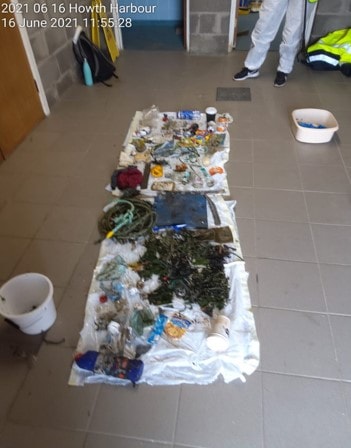
Plastic waste collected by the Seabin device, Howth Harbour, Dublin. Photography by Rowan Byrne.
How plastic harms marine wildlife — the mechanisms
Ingestion
Marine animals ingest plastic directly — mistaking it for prey — or indirectly through contaminated food. Sea turtles mistake plastic bags for jellyfish. Seabirds feed plastic fragments to their chicks. Fish consume microplastics throughout the water column. Ingested plastic causes internal blockages, false satiation (animals feel full but receive no nutrition), internal lacerations and toxic chemical exposure.
Entanglement
Ghost fishing gear, six-pack rings, plastic packaging and discarded nets entangle marine animals. Entanglement causes drowning in air-breathing species, limb loss, severe wounds, restricted movement and starvation. Sea turtles, marine mammals, sharks and seabirds are all regularly documented as entanglement victims. Ghost nets continue fishing for years after being lost.
Microplastic contamination
Plastic fragments into smaller and smaller particles under UV radiation and wave action. Microplastics (under 5mm) and nanoplastics (under 1 micron) are now found throughout the ocean. They are ingested by filter feeders, zooplankton and fish larvae. They carry persistent organic pollutants (POPs) — including PCBs, DDT and flame retardants — which accumulate in fatty tissues and disrupt hormonal and immune systems.
Habitat degradation
Plastic debris smothers seagrass meadows and coral reefs, blocking light and oxygen. It abrades coral tissue, creating infection pathways. Plastic on nesting beaches can trap sea turtle hatchlings. Floating plastic creates artificial rafts that transport invasive species to new ecosystems, disrupting native communities.
Frequently asked questions
How does plastic pollution affect sea turtles?
Sea turtles are among the most severely affected marine species. They ingest plastic bags, mistaking them for jellyfish — a primary prey item. Ingested plastic causes internal blockages, malnutrition and death. Turtles also become entangled in discarded fishing gear, ghost nets and plastic packaging, which can cause drowning, limb loss and severe injuries. Leatherback turtles (Dermochelys coriacea) are particularly vulnerable due to their jellyfish-dominated diet.
How does plastic pollution affect whales and dolphins?
Cetaceans ingest plastic directly and through contaminated prey. Sperm whales have been found with hundreds of kilograms of plastic in their stomachs, causing starvation and death. Microplastics accumulate in blubber and tissues, carrying persistent organic pollutants (POPs) that disrupt hormonal systems and immune function. Entanglement in ghost fishing gear is a leading cause of cetacean mortality worldwide.
What are microplastics and why are they dangerous?
Microplastics are plastic particles smaller than 5mm, produced either directly (microbeads in cosmetics, synthetic fibres from clothing) or through the fragmentation of larger plastic items under UV radiation and wave action. They are now found throughout the ocean — from surface waters to deep-sea sediments. Marine organisms ingest microplastics directly or through contaminated prey. They carry toxic chemical additives and adsorb persistent organic pollutants from seawater, transferring these up the food chain.
How does plastic pollution affect coral reefs?
Plastic debris smothers coral colonies, blocking light and oxygen. It abrades coral tissue, creating entry points for bacterial infection. Studies have found that contact with plastic increases the likelihood of coral disease by up to 89%. Ghost nets draped over reefs cause physical destruction and prevent recovery. Microplastics in reef sediments disrupt the feeding behaviour of coral polyps.
How much plastic enters the ocean each year?
Estimates suggest that between 8 and 12 million tonnes of plastic enter the ocean annually. The total amount of plastic in the ocean is estimated at over 150 million tonnes, with the figure growing every year. Single-use plastics — packaging, bottles, bags, straws and food containers — account for the majority of ocean plastic by item count.
Can marine wildlife recover from plastic pollution?
Individual animals can recover from entanglement if rescued promptly and injuries are not too severe. Rowan Byrne participated in leatherback sea turtle entanglement rescues in Dominica, where turtles caught in lobster pot ropes were freed and survived. However, population-level recovery requires a dramatic reduction in plastic entering the ocean — which depends on systemic changes in production, consumption and waste management.
What can be done to reduce plastic pollution in the ocean?
Effective responses operate at multiple scales. At the policy level: banning single-use plastics, extended producer responsibility legislation, improved waste management infrastructure and international agreements. At the community level: beach clean-ups, citizen science monitoring, Seabin devices in harbours and fishing gear retrieval programmes. At the individual level: reducing single-use plastic consumption, choosing natural fibre clothing and supporting organisations working on ocean plastic.
What is ghost fishing gear?
Ghost fishing gear refers to lost, abandoned or discarded fishing nets, lines, traps and other equipment that continues to catch and kill marine wildlife long after it has been lost. It is estimated that over 640,000 tonnes of fishing gear is lost or abandoned in the ocean each year. Ghost nets are one of the leading causes of entanglement mortality in sea turtles, marine mammals, sharks and seabirds.