
From Dominica to a U.S. Forever Stamp
The Story Behind Rowan Byrne's Leatherback Photograph
"An image made during a sea-turtle conservation project in Dominica in 2006 — eighteen years later, selected by the United States Postal Service to represent the leatherback turtle on its Protect Sea Turtles Forever stamps."
Written and curated by Rowan Byrne · Original photograph © Rowan Byrne / MarineCreatures, 2006
© Rowan Byrne / MarineCreatures · Rosalie Beach, Dominica
PROTECT SEA TURTLES
FOREVER
USA
USPS Protect Sea Turtles · Issued 11 June 2024 · Photograph: Rowan Byrne
USPS selected an existing photograph by Rowan Byrne for the leatherback design. The stamp was not commissioned from Rowan Byrne; USPS selected an existing image from his archive.
Rosalie Beach, Dominica · 2006 → Corpus Christi, Texas · 11 June 2024
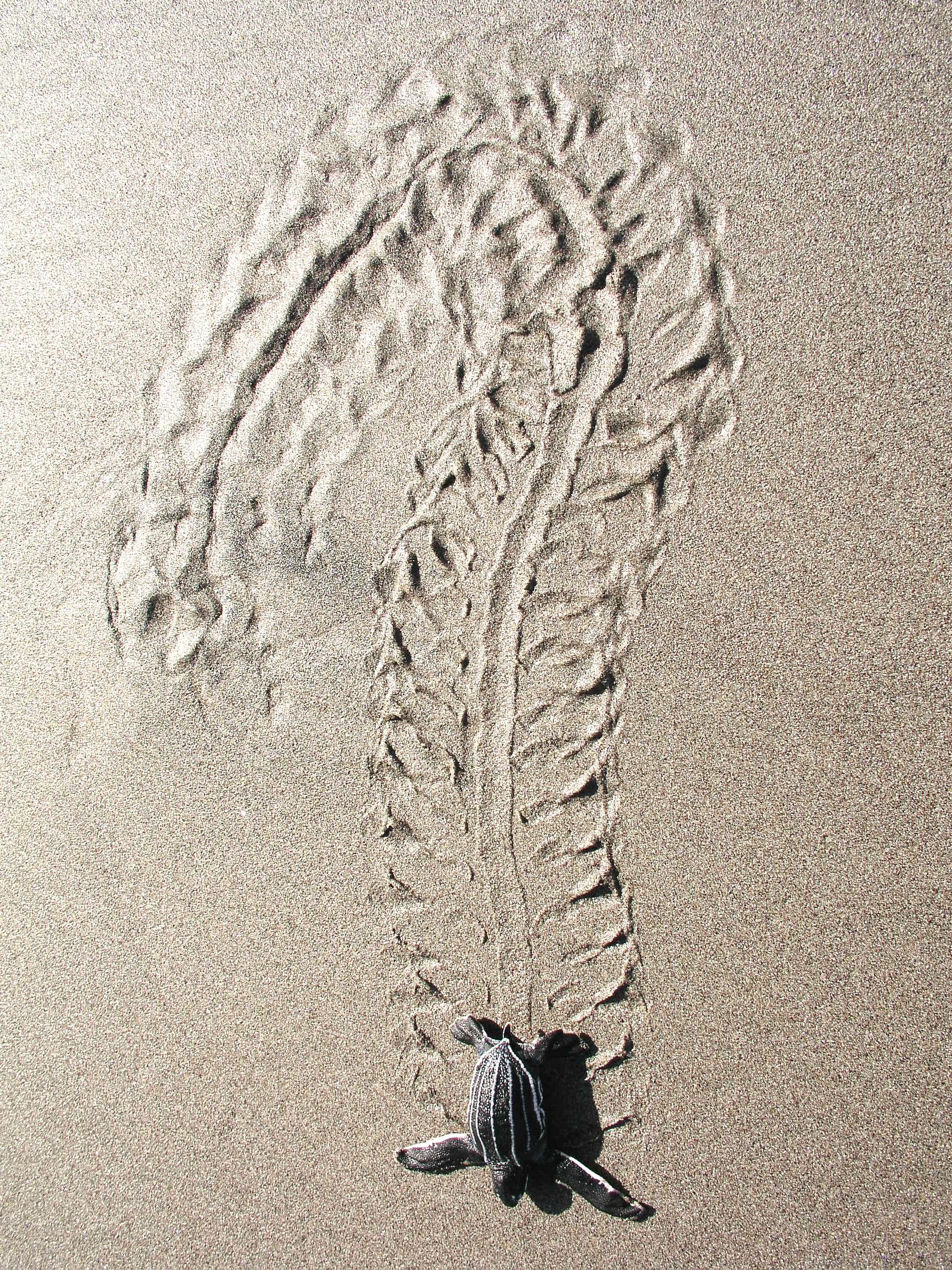
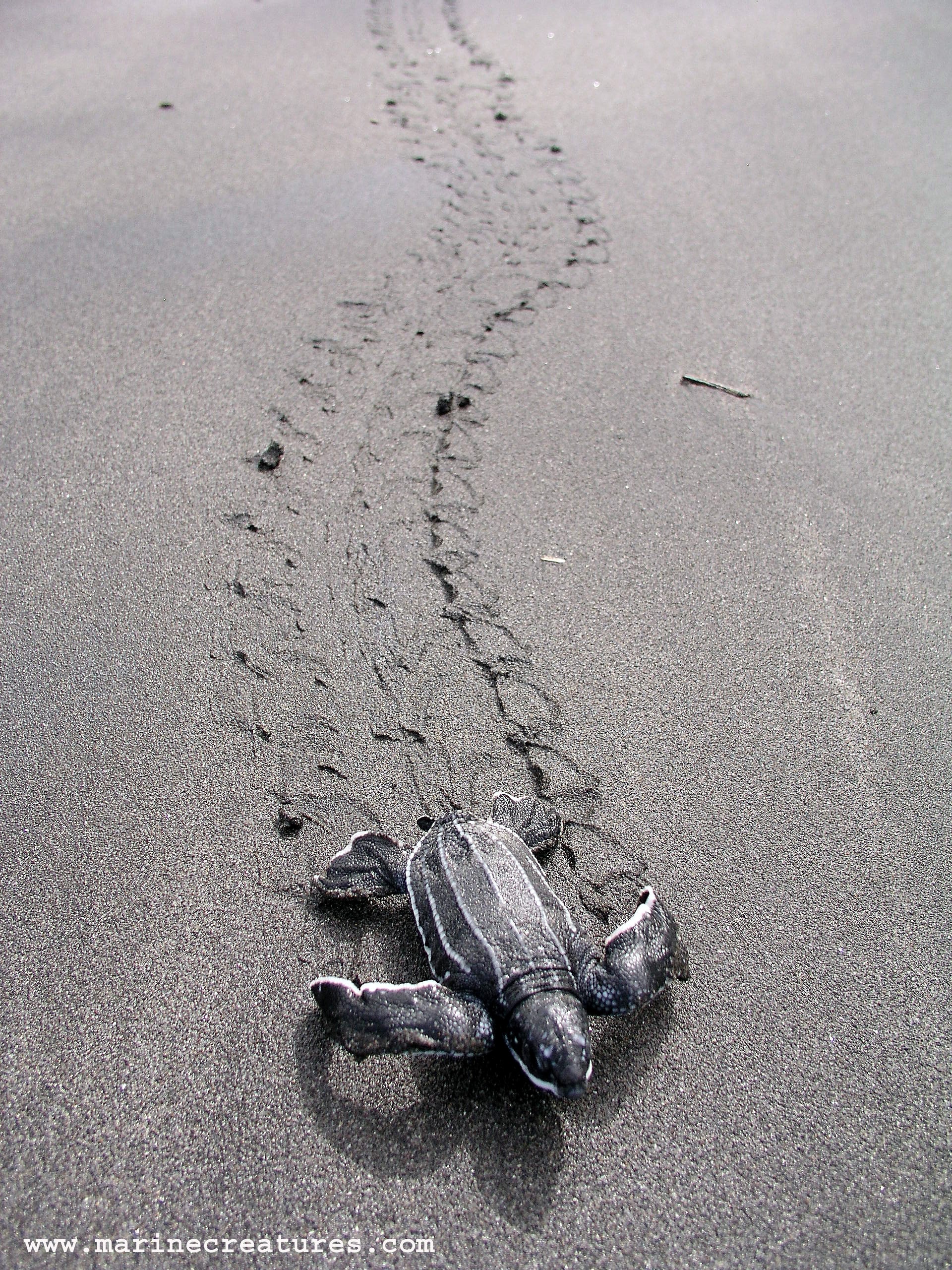
On a dark beach on the Caribbean island of Dominica in 2006, a marine biologist crouched in the sand and raised his camera. In front of him, a leatherback sea turtle hatchling — barely a few inches long — was making its first and most dangerous journey: from the nest to the sea. The photograph he made that night was a field image, taken in the course of conservation work. It was not made for a gallery, a magazine or a postal service. It was made because the moment was there, and because documenting it was part of the work.
Eighteen years later, on 11 June 2024, the United States Postal Service officially issued the Protect Sea Turtles Forever stamp pane in Corpus Christi, Texas. One of the six designs in the pane — the leatherback — carried Rowan Byrne's 2006 photograph. The USPS stamp announcement identifies him by name: 'Rowan Byrne, photographer.'
For a marine biologist and conservationist, having an image created in the field become part of a national postal issue is an unusual intersection of science, conservation, photography, public communication and history. This page tells that story — from the conservation project in Dominica to the post offices of the United States.
The Stamp
Official USPS Protect Sea Turtles Forever Stamp — Issue Details
Issue
Protect Sea Turtles
Issue date
11 June 2024
Issue city
Corpus Christi, Texas
Stamp type
First-Class Mail Forever
Format
Pane of 18 stamps
Number of designs
6
Print quantity
27,000,000 stamps
Leatherback photographer
Rowan Byrne
USPS art director
Derry Noyes
Printer
Ashton Potter (USA) Ltd.
USPS item number
581300
Collector reference
Scott #5867 (philatelic catalogue reference — not USPS terminology)
Forever stamp: A 'Forever' stamp remains valid for the applicable First-Class Mail one-ounce rate regardless of subsequent changes to postal rates.
Issue date note: May 2024 was the period of advance media coverage and publicity. The official USPS issue and dedication date was 11 June 2024.
USPS selected six existing photographs to create the pane. The six species represented were Kemp's ridley, leatherback, olive ridley, green sea turtle, loggerhead and hawksbill. USPS states that all six species depicted are listed as threatened or endangered under the U.S. Endangered Species Act.
The Photograph: Rosalie Beach, Dominica, 2006
Rowan Byrne travelled to Dominica in 2003 to work on sea-turtle conservation at Rosalie Beach, on the island's Atlantic coast. The work was associated with the Rosalie Sea Turtle Initiative (RoSTI), a conservation project addressing threats to leatherback and other sea turtles nesting on the beach, including poaching.
The 2006 WIDECAST Annual Project Report — prepared by Rowan Byrne as Project Manager of the Rosalie Sea Turtle Initiative — carries the copyright attribution '© Rowan Byrne / marinecreatures.com'. The report documents the conservation and research work carried out at Rosalie Beach during that period.
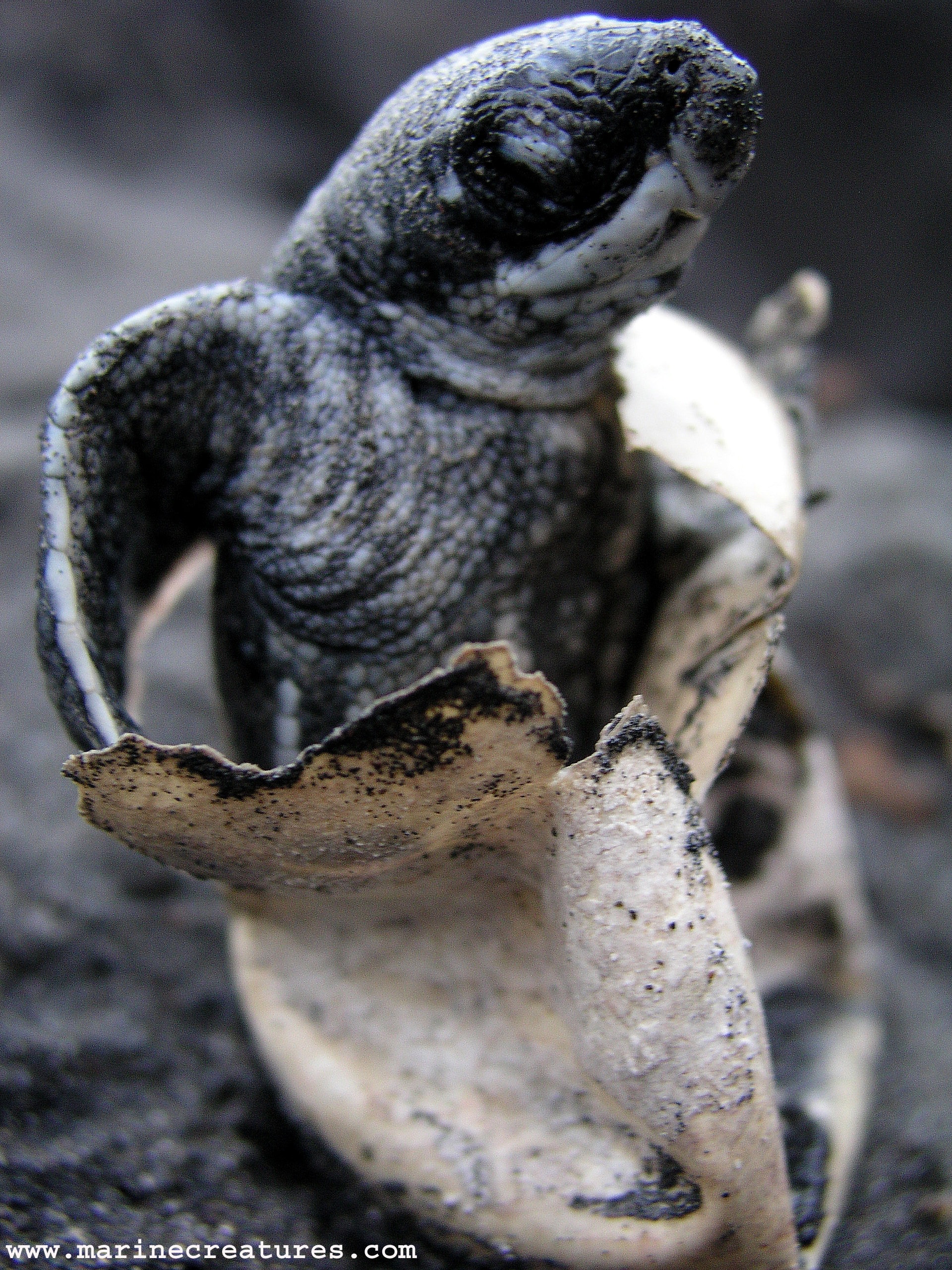
The photograph was made in 2006 during that conservation work. It shows a leatherback hatchling at one of the most critical moments in its life: the crossing from nest to sea. Leatherback hatchlings emerge tiny — typically only a few inches long — and must navigate the beach and reach the water while facing predators, dehydration and other hazards. The Irish Independent, reporting on the stamp story in 2024, described the odds as approximately one in 1,000 surviving to adulthood; this figure reflects the general understanding of sea-turtle hatchling survival rather than a single peer-reviewed statistic.
The image was not created for commercial or editorial purposes. It was a field photograph — part of the visual record of a conservation project. That origin is precisely what gives it its character: it documents a real moment in the life of a real animal, on a real beach, during real conservation work.
Before It Was a Stamp, It Was Conservation
The photograph is significant because it emerged from field conservation work rather than being created specifically as a postal image. The Rosalie Sea Turtle Initiative was a community-based conservation project on Dominica's Atlantic coast, working to protect nesting leatherback turtles and their eggs from poaching and other threats.
Rowan Byrne travels to Dominica and begins sea-turtle conservation and research work at Rosalie Beach, associated with the Rosalie Sea Turtle Initiative.
Rosalie Sea Turtle Initiative project work continues. Rowan Byrne prepares the WIDECAST Biennium Project Report covering this period.
Rowan photographs the leatherback hatchling on Rosalie Beach. He prepares the RoSTI Annual Project Report for WIDECAST, credited as Project Manager.
The photograph exists as part of Rowan Byrne's marine biology and photography archive at MarineCreatures.com.
USPS selects existing photographs for the Protect Sea Turtles Forever stamp issue. Rowan Byrne's leatherback hatchling image is chosen for the leatherback design.
The Protect Sea Turtles Forever stamps are officially issued at a dedication ceremony in Corpus Christi, Texas. The USPS stamp announcement identifies 'Rowan Byrne, photographer' for the leatherback design.
The photograph becomes part of a U.S. national postal issue — a permanent part of the visual history of sea-turtle conservation.
WIDECAST / Rosalie Sea Turtle Initiative — Primary sources
The Six Turtles
The Protect Sea Turtles pane features six designs, each based on an existing photograph of a different sea turtle species. USPS designed the issue to raise public awareness of the threats facing sea turtles. The leatherback design is credited to Rowan Byrne. The other five designs were photographed by other photographers.
According to USPS, the ancestors of marine turtles have existed for more than 100 million years. Modern threats include exploitation, habitat destruction, human activity and the impacts of climate change. All six species depicted in the pane are listed as threatened or endangered under the U.S. Endangered Species Act.
Kemp's ridley
Lepidochelys kempii
Critically EndangeredThe rarest sea turtle species; nests almost exclusively on a single beach in Mexico.
Leatherback
Dermochelys coriacea
Vulnerable / Critically Endangered (some populations)The largest living sea turtle; the only species without a hard shell. Photograph by Rowan Byrne.
Olive ridley
Lepidochelys olivacea
VulnerableKnown for mass nesting events called 'arribadas', when thousands of females nest simultaneously.
Green sea turtle
Chelonia mydas
EndangeredNamed for the green colour of its fat; important grazers of seagrass and algae.
Loggerhead
Caretta caretta
VulnerableNamed for its large head; uses powerful jaws to feed on hard-shelled prey.
Hawksbill
Eretmochelys imbricata
Critically EndangeredCritically endangered; important for maintaining healthy coral reef ecosystems.
Why Being Selected for a U.S. Forever Stamp Matters
A mass-publication object
A U.S. postage stamp is not a photographic award or a gallery exhibition. It is a mass-publication object — a piece of official government communication distributed through the postal system of the United States.
A national public-awareness campaign
The USPS Protect Sea Turtles issue was a national public-awareness initiative, designed to draw attention to the conservation status of sea turtles and the threats they face.
One of six designs
The leatherback image was one of only six photographic designs selected for the pane. USPS officially identifies 'Rowan Byrne, photographer' in its own stamp announcement.
27 million stamps printed
27 million Protect Sea Turtles stamps were printed. The actual number of people who viewed or used them is unknowable — but the scale of the print run reflects the reach of a national postal issue.
From field to public record
The image moved from an individual field photograph — made during conservation work on a Caribbean beach — into a national postal and conservation communication campaign. That journey is unusual for any photograph, and particularly for one made in the course of scientific fieldwork.
An Irish Marine Biologist on a United States Forever Stamp
Irish media including RTÉ and the Irish Independent reported the story specifically as an Irish marine biologist's photograph appearing on a U.S. postal stamp. The defensible statement is this: an Irish marine biologist's photograph became the leatherback image on the U.S. Postal Service's Protect Sea Turtles Forever stamp issue.
An extraordinary and highly unusual distinction.
I have not identified an authoritative philatelic source establishing another Irish marine biologist or Irish wildlife photographer whose photograph has appeared on a U.S. Forever stamp. This page deliberately avoids claiming an absolute historical first without documentary proof.
Independent Coverage
Irish marine biologist's sea turtle photograph featured on U.S. postage stamp
RTÉ Radio 1 coverage of Rowan Byrne's photograph appearing on the USPS Protect Sea Turtles stamp.
Oliver Callan ·
Photo of sea turtle taken by Irish marine biologist used in US postal stamp
Irish Independent report on Rowan Byrne's leatherback photograph selected for the USPS Protect Sea Turtles Forever stamp issue.
Irishman's Photo of Sea Turtle to Feature in New US Postal Stamp Set
Afloat.ie report on the Irish marine biologist's photograph selected for the USPS sea turtle stamp issue.
These are independent sources reporting the story. They are not testimonials created by or for Rowan Byrne.
Dermochelys coriacea — The Leatherback Sea Turtle
The species behind the stamp
The leatherback sea turtle (Dermochelys coriacea) is the largest living sea turtle and one of the most remarkable reptiles on Earth. Understanding the species gives the photograph — and the conservation work behind it — its full context.
The largest sea turtle
Leatherbacks are the largest of all living sea turtles, with adults reaching up to 2 metres in length and weighing up to 900 kilograms. They are also the deepest-diving reptiles known, capable of descending to more than 1,000 metres.
A leathery shell
Unlike other sea turtles, the leatherback has no hard bony shell. Instead, its back is covered by a flexible, leathery skin reinforced by thousands of tiny bone fragments — giving the species its name and its unique silhouette.
Ocean migrations
Leatherbacks undertake some of the longest migrations of any reptile, travelling thousands of kilometres between tropical nesting beaches and cold-water feeding grounds in the North Atlantic, Pacific and elsewhere.
Nesting beaches
Female leatherbacks return to tropical beaches to nest, often to the same beach where they were born. Dominica's Atlantic coast, including Rosalie Beach, is one of the Caribbean's important leatherback nesting sites.
Threats
Leatherbacks face multiple threats: fisheries bycatch (accidental capture in fishing gear), plastic ingestion (they mistake plastic bags for jellyfish, their primary prey), nesting beach loss, light pollution that disorients hatchlings, poaching of eggs and adults, and the emerging effects of climate change on nesting beach temperatures and sea levels.
Conservation status
The leatherback is listed as Vulnerable on the IUCN Red List globally, though some regional populations — including the Pacific leatherback — are considered Critically Endangered. All leatherback populations are protected under the U.S. Endangered Species Act.
Why the hatchling matters
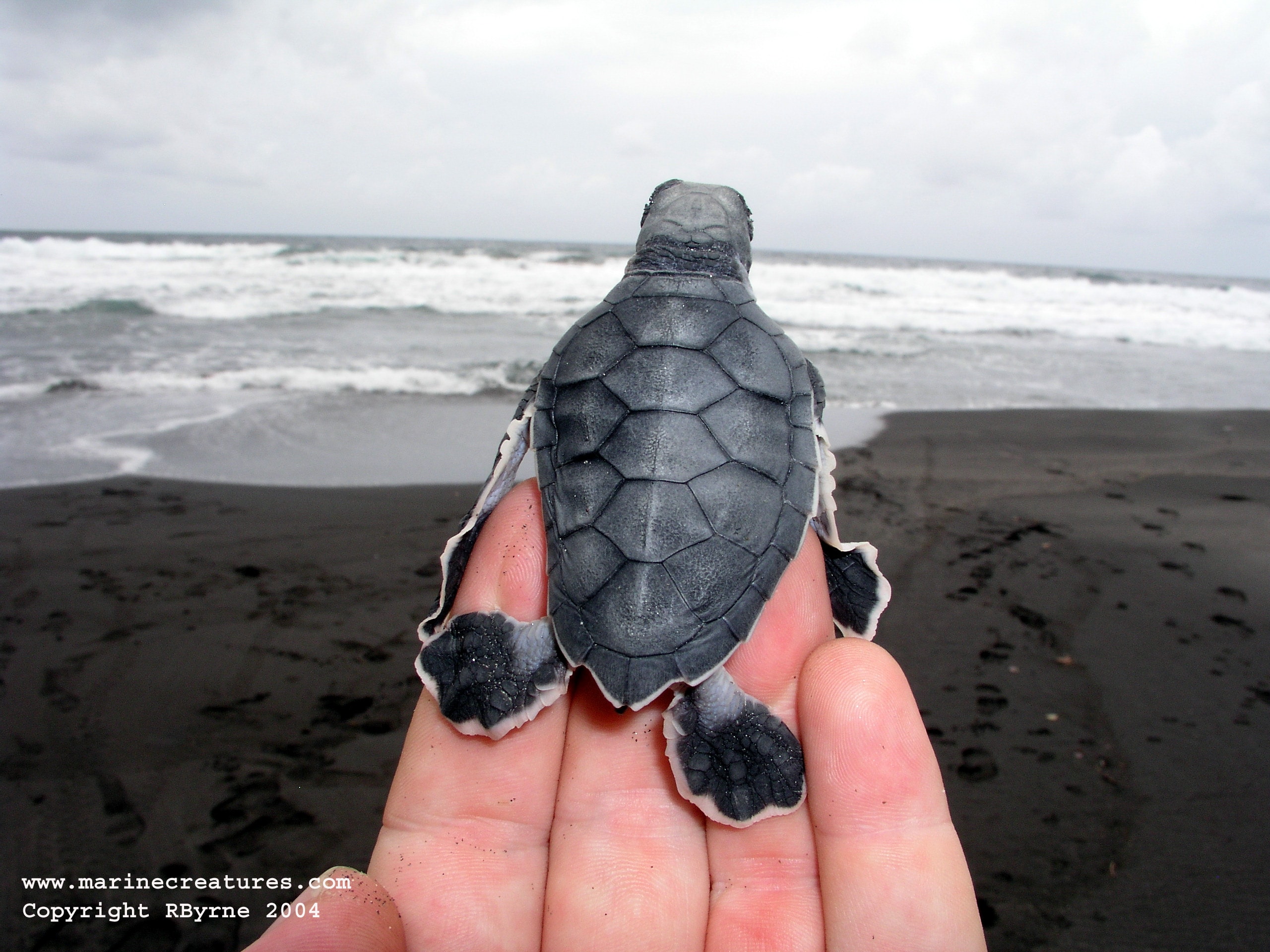
The hatchling stage is one of the most vulnerable in the leatherback's life cycle. Emerging from the nest, the tiny animal must cross the beach — navigating by the light of the open horizon — and reach the sea. Many do not survive. Those that do face years in the open ocean before returning, as adults, to the beaches where they were born.
When Science Becomes a Photograph
Rowan Byrne's dual role as marine biologist and photographer
The photograph of the leatherback hatchling is not simply a wildlife image. It is visual scientific communication — a record made in the field, during conservation work, by a marine biologist who was also a photographer.
Field photography serves multiple functions in marine biology and conservation: it documents species and behaviours, creates a visual record of research and fieldwork, communicates conservation issues to audiences who may never visit a nesting beach, and preserves moments that would otherwise exist only in field notes.
The fact that a field photograph made in this context was later selected for a national postal issue is a reminder that scientific and conservation photography can reach audiences far beyond the scientific community — and that the visual record of conservation work has a life beyond the project that created it.
The Journey of an Image
Fieldwork
Conservation and research work at Rosalie Beach, Dominica, 2003–2006.
Photograph
Leatherback hatchling photographed by Rowan Byrne during the 2006 nesting season.
Archive
Image held in Rowan Byrne's marine biology and photography archive at MarineCreatures.com.
Selection
USPS selects existing photographs for the Protect Sea Turtles Forever stamp pane.
USPS design
Art director Derry Noyes designs the six-stamp pane using the selected photographs.
Forever stamp
Officially issued 11 June 2024, Corpus Christi, Texas. 27 million stamps printed.
Public record
The photograph becomes part of the postal and conservation history of the United States.
Philatelic Details
For collectors and philatelic reference
Issue
Protect Sea Turtles
Issue date
11 June 2024
Issue city
Corpus Christi, Texas
Stamp type
First-Class Mail Forever
Format
Pane of 18 stamps
Number of designs
6
Print quantity
27,000,000 stamps
Leatherback photographer
Rowan Byrne
USPS art director
Derry Noyes
Printer
Ashton Potter (USA) Ltd.
USPS item number
581300
Collector reference
Scott #5867 (philatelic catalogue reference — not USPS terminology)
Forever stamp: A 'Forever' stamp remains valid for the applicable First-Class Mail one-ounce rate regardless of subsequent changes to postal rates.
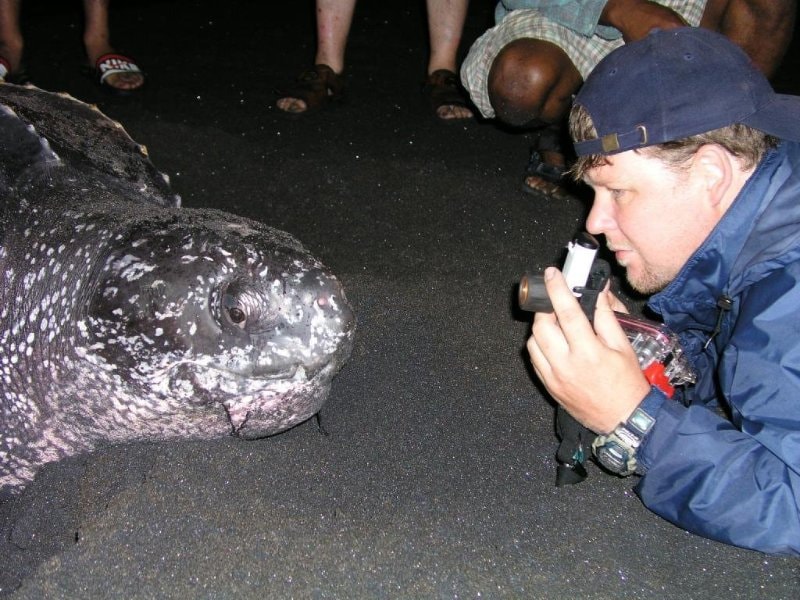
About the photographer
Rowan Byrne
Marine Biologist · Marine Ecologist · Conservationist · Researcher · Photographer
Irish marine biologist, marine ecologist, conservationist, researcher and photographer with more than 30 years of experience working across marine environments, conservation, environmental assessment, research and marine sustainability. Rowan Byrne is the founder of MarineCreatures.com — the evolving archive of his marine biology, conservation, research, photography, expeditions, publications and field history.
Original photograph © Rowan Byrne / MarineCreatures, 2006
The MarineCreatures Archive
MarineCreatures is the evolving archive of Rowan Byrne's marine biology, conservation, research, photography, expeditions, publications and field history. The leatherback photograph and the Dominica conservation work are part of that archive — connected to three decades of marine fieldwork across more than 22 countries.
Sources & Further Reading
Official sources
Independent media
Explore the wider MarineCreatures archive
"One photograph. One hatchling. One conservation project. Eighteen years later, a place in the postal history of the United States."